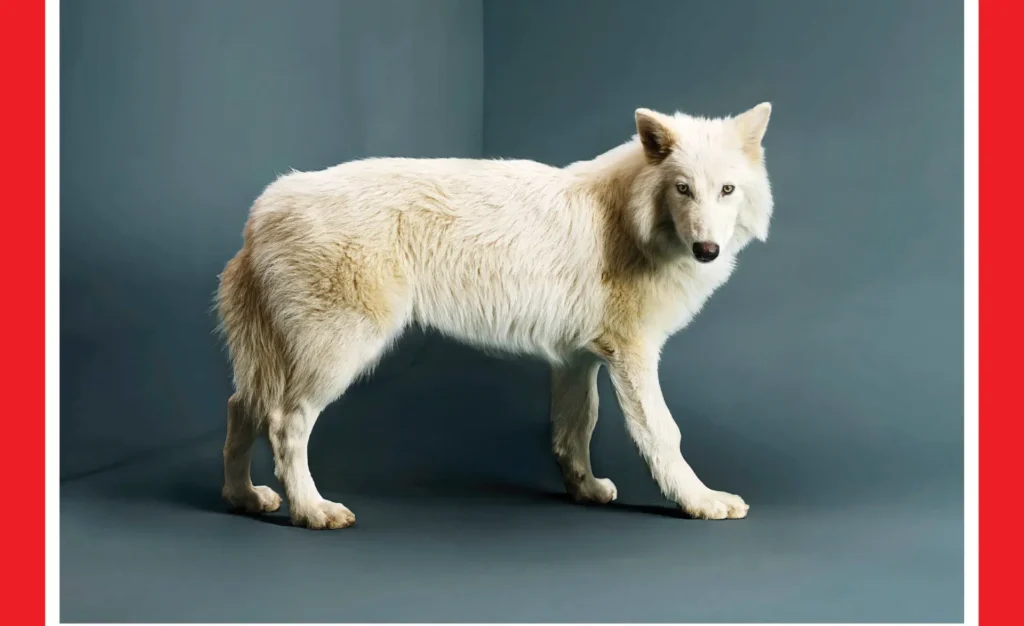
In April 2025, three white-furred wolf pups named Romulus, Remus, and Khaleesi tumbled across the cover of Time magazine. The headline declared them dire wolves — the apex predator of Pleistocene North America, an animal extinct for roughly 12,500 years. Skeptics immediately objected that the pups were genetically modified gray wolves, not true Aenocyon dirus. Fans called it a miracle. Investors did the math and concluded that whatever the pups were, the company that made them was now worth $10.2 billion.
That company is Colossal Biosciences, and its founders argue the dire wolf pups are merely a warm-up. The real targets are the woolly mammoth, the thylacine (Tasmanian tiger), and the dodo. The real product, depending on who is asked on a given day, is either a return of lost species, a new pipeline of conservation tools for living ones, or the most elaborate biotech platform play of the 2020s. The audacity is the point. So is the funding round — Colossal has raised more than $435 million across four rounds since 2021, making it the highest-valued de-extinction company in history because it is, by definition, the only one. This is what they have actually built so far, what they have only promised, and how to tell the difference.
What Is Colossal Biosciences?
Colossal Biosciences was founded in September 2021 by serial technology entrepreneur Ben Lamm and Harvard geneticist George Church. Lamm previously founded the artificial intelligence company Hypergiant and three other venture-backed companies; he supplies the operations, fundraising, and media gravity. Church runs the Wyss Institute genetics lab at Harvard Medical School, helped pioneer CRISPR-based genome engineering and the first direct genome sequencing methods, and supplies the scientific credibility that has historically been hard to come by in de-extinction circles.
The company is headquartered in Dallas, Texas, with major laboratory operations in Boston (close to Church's Harvard group) and Melbourne, Australia (the home of its thylacine program). It markets itself, accurately, as the world's first de-extinction company. Its stated mission is to use advanced genetic engineering — including CRISPR, multiplex gene editing, induced pluripotent stem cells (iPSCs), and ancient DNA reconstruction — to restore extinct species, rewild lost ecosystems, and develop conservation tools for endangered animals along the way.
In practice, Colossal looks less like a wildlife charity and more like a venture-funded biotech platform. As of April 2026 it employs roughly 170 scientists and staff, has filed more than 100 patents covering gene-editing tools, reproductive technologies, and computational pipelines, and has spun out two operating companies and acquired two more. Whether the platform is being used primarily to revive lost species or primarily to commercialise the supporting technology is one of the open questions the company's investors are betting on.
The $10.2 Billion Bet on De-Extinction
Colossal's funding history reads like a stress test of how much capital a sufficiently provocative scientific narrative can attract. The company launched in September 2021 with a $15 million seed round led by Tier 1 Capital, with backing from venture investors such as Thomas Tull (the former Legendary Entertainment chief and a major life-sciences investor) and Tony Robbins. The seed announcement was paired with the public reveal of the woolly mammoth project, which generated several news cycles' worth of free attention.
In March 2022, Colossal raised a $60 million Series A led by Thomas Tull's investment vehicle, with participation from Breyer Capital, Animoca Brands, At One Ventures, and Bob Nelsen of ARCH Venture Partners. The Series A coincided with the launch of the thylacine de-extinction program in partnership with the University of Melbourne. Series B followed in January 2023 at $150 million, led again by Thomas Tull and joined by United States Innovative Technology Fund — putting the company at a roughly $1.5 billion valuation and qualifying it as a unicorn within sixteen months of incorporation.
The decisive round arrived in January 2025. Colossal closed a $200 million Series C at a $10.2 billion post-money valuation, led by TWG Global with participation from In-Q-Tel (the strategic investment arm of the U.S. Central Intelligence Agency), Tim Draper, and returning investors including Tull, Breyer, and Animoca. The round made Colossal the first decacorn — a privately held company valued above $10 billion — headquartered in Texas, and one of only a handful of pre-revenue biotech companies to ever reach that valuation. Cumulative capital raised across the four announced rounds totals approximately $435 million, with persistent reporting through 2025 and 2026 of an additional growth round in the pipeline. Reuters and The Wall Street Journal both reported in early 2026 that Colossal was holding exploratory IPO conversations.
The investor base is unusual for a biotech of any size. Alongside specialist funds (ARCH Venture Partners, Breyer Capital), Colossal has attracted strategic capital from the U.S. intelligence community via In-Q-Tel — an investment widely interpreted as interest in synthetic biology and biosurveillance applications rather than mammoths — plus high-profile individuals (Robbins, Tull, Draper, Paris Hilton, Peter Jackson, Joe Rogan) whose presence helps keep the company in the cultural conversation. That conversation is itself part of the moat.
Why De-Extinction? The Conservation Argument
The obvious objection to spending hundreds of millions of dollars on extinct animals is that there are roughly 47,000 species currently classified as threatened with extinction by the International Union for Conservation of Nature, and they could presumably use the money. Colossal's answer is that the toolkit required to bring back a mammoth is exactly the toolkit required to save many living species, and that traditional conservation approaches are losing — global vertebrate populations have declined by roughly 73% since 1970 according to the WWF Living Planet Index, and habitat protection alone is no longer keeping pace.
The technologies Colossal develops for de-extinction are reproductive, genomic, and computational, and each has clear analogues in conservation biology. Multiplex CRISPR editing — the ability to make many simultaneous, precise changes to a genome — can introduce climate-resilience or disease-resistance alleles into vulnerable populations. Induced pluripotent stem cells (iPSCs) derived from skin biopsies allow scientists to bank the genetic material of endangered animals indefinitely and, in principle, to derive sperm and eggs without further sampling of wild populations. Somatic cell nuclear transfer (cloning) can recover individuals from preserved cells of animals that died decades ago. Ancient DNA reconstruction techniques originally built to read mammoth genomes are now standard tools in conservation genetics for measuring inbreeding and historical population structure.
Colossal has translated this argument into specific living-species programs. In partnership with researchers at the University of Melbourne, the company has worked on northern quolls — a small Australian marsupial being driven extinct by invasive cane toads — to introduce a single edited allele that confers resistance to the toads' powerful bufotoxin. The "super quoll" project announced in April 2026 reported the first edited founders surviving toxin challenge under controlled conditions. Separate work targets devil facial tumour disease in Tasmanian devils, the contagious cancer that has killed roughly 80% of the wild population since the 1990s. On Earth Day 2026, Colossal announced an expanded partnership with conservation NGOs to make its iPSC banking technology available to the IUCN Conservation Genetics Specialist Group at no cost for designated critically endangered species.
Whether one finds this argument convincing depends partly on how one accounts for the money. Critics observe that the conservation work is real but small relative to the de-extinction spend, and that the de-extinction spend is itself the magnet for the capital that funds the conservation work. It is a defensible flywheel. It is also a flywheel only if the headline projects keep generating headlines.
The Four Active De-Extinction Projects
Colossal has publicly committed to four active de-extinction targets. Each operates through a similar template — sequence the extinct animal's genome from preserved specimens, identify the suite of genetic differences that separate it from its closest living relative, edit those differences into iPSCs of the living relative, and produce live animals via either embryo transfer to a surrogate or somatic cell nuclear transfer. The execution differs sharply across species.
| Species (Latin name) | Closest living relative / surrogate | Estimated extinction | Stage as of April 2026 | Public target for first calf/pup/joey |
|---|---|---|---|---|
| Woolly mammoth (Mammuthus primigenius) | Asian elephant (Elephas maximus) | ~4,000 years ago (mainland); 4,000 BP (Wrangel Island) | "Woolly mouse" published 2025; ~85 mammoth-specific traits identified; elephant iPSCs derived | 2028 (per Lamm public statements) |
| Thylacine (Thylacinus cynocephalus) | Fat-tailed dunnart (Sminthopsis crassicaudata) | 1936 (last captive specimen) | High-quality genome assembly published; dunnart iPSCs and assisted reproduction protocols established | 2027–2028 |
| Dodo (Raphus cucullatus) | Nicobar pigeon (Caloenas nicobarica) | ~1681 | Reference genome published 2022; primordial germ cell platform under development | Not publicly committed |
| Dire wolf (Aenocyon dirus) | Gray wolf (Canis lupus) | ~12,500 years ago | Three live pups born 2024–2025; 20 edits across 14 genes | Achieved (with caveats) |
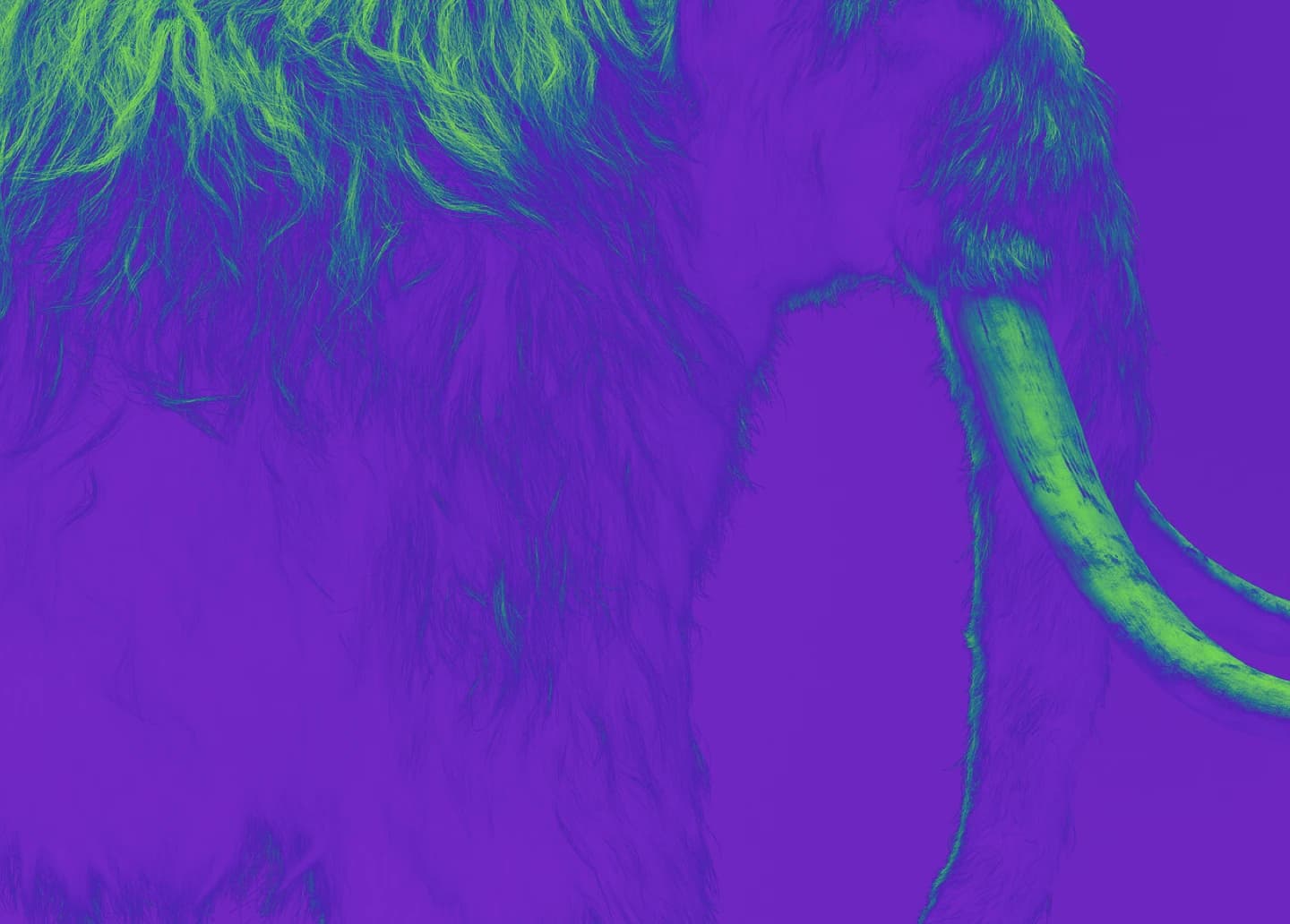
The woolly mammoth project is the company's flagship and the one Church has personally championed since the early 2010s. Colossal's approach is not to clone a mammoth — no intact mammoth nucleus has ever been recovered — but to engineer cold-adapted traits into Asian elephant cells. Researchers have catalogued roughly 85 genes thought to underlie mammoth-specific phenotypes such as woolly hair, subcutaneous fat, smaller ears, and modified haemoglobin (encoded by HBB) that releases oxygen efficiently at low temperatures. In March 2025 the company announced a "woolly mouse" — laboratory mice carrying seven mammoth-derived hair, fat, and metabolic edits — as a proof-of-concept that the multiplex editing pipeline produces viable animals with the predicted phenotypes. The first mammoth-trait elephant calf, if it arrives on schedule, will not be a mammoth in any taxonomic sense; it will be a genetically modified Asian elephant carrying a subset of mammoth alleles.
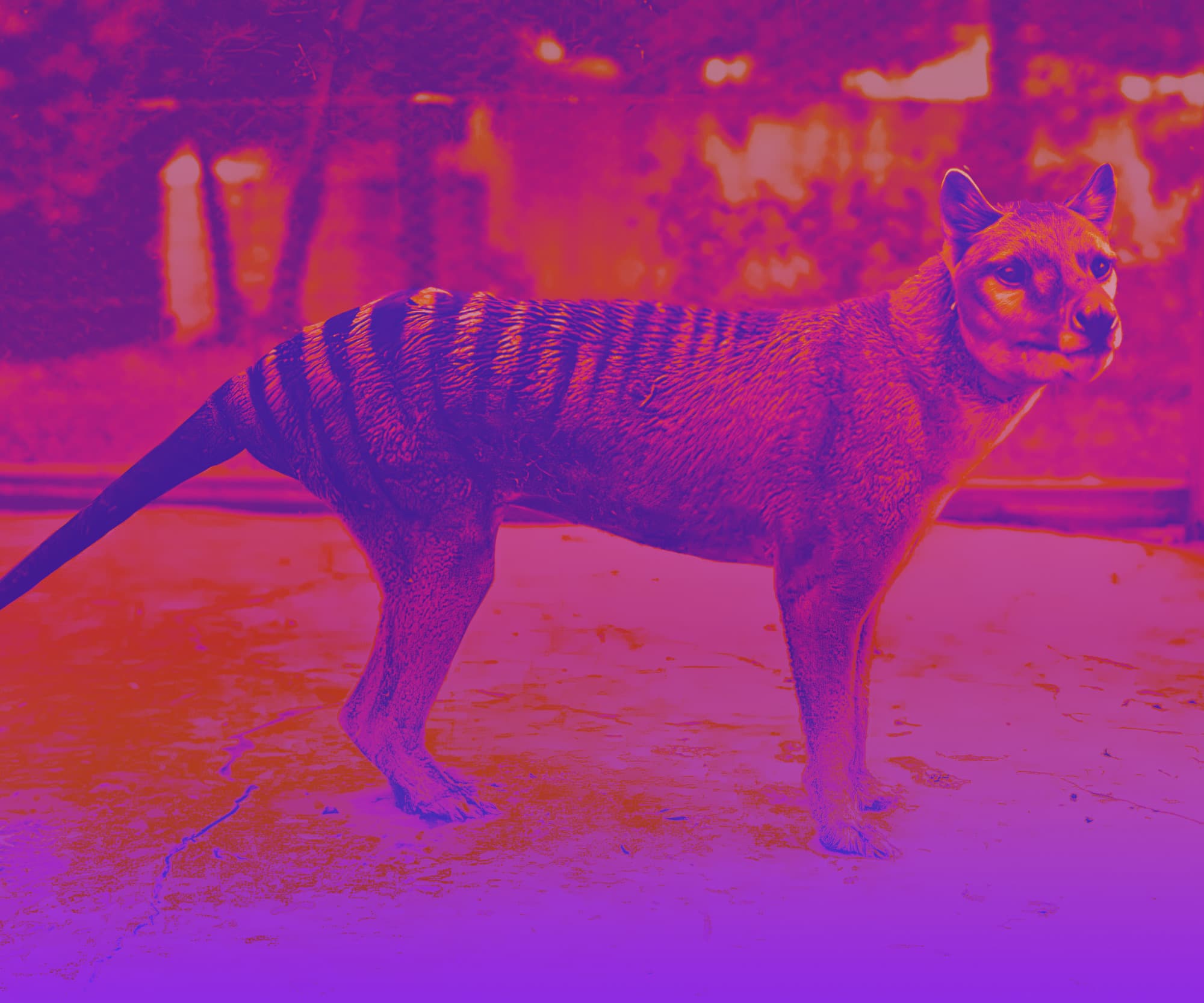
The thylacine program is run primarily out of the Thylacine Integrated Genetic Restoration Research (TIGRR) Lab at the University of Melbourne, which Colossal absorbed via partnership in 2022 and acquired more formally in 2024. The thylacine has two scientific advantages over the mammoth: it went extinct only 90 years ago, with well-preserved museum specimens, and its closest living relative — the fat-tailed dunnart — is a small, fast-breeding marsupial well suited to laboratory work. The disadvantage is that marsupial reproductive biology is poorly understood, and there is no proven assisted-reproduction protocol that has produced a surrogacy event between species of such different sizes. Colossal published a high-quality thylacine genome in 2024 and has reported successful derivation of dunnart iPSCs. A live thylacine joey is the next major public milestone.
The dodo project, led by ancient-DNA pioneer Beth Shapiro (now Colossal's Chief Science Officer after a long career at the University of California, Santa Cruz), uses the Nicobar pigeon as the closest living relative — a relationship established by Shapiro's group in earlier work. Avian de-extinction is technically harder than mammalian de-extinction because birds cannot be cloned by somatic cell nuclear transfer in the standard way; the route involves editing primordial germ cells (PGCs) and transplanting them into a surrogate species' embryo. The company has not committed to a public timeline for a dodo hatchling.
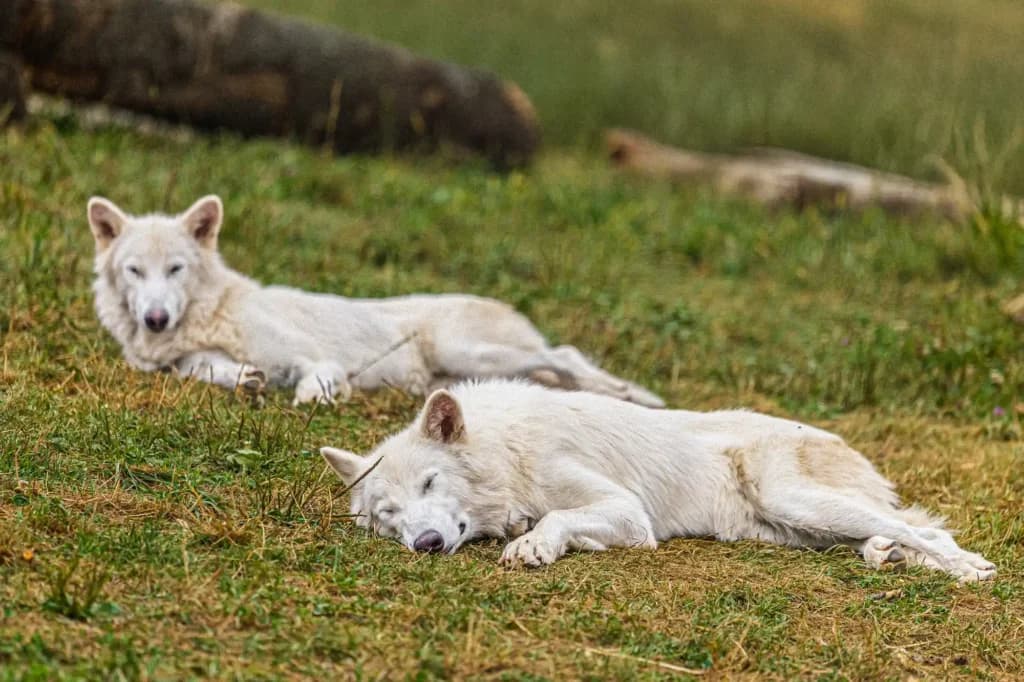
The dire wolf project is the only one that has produced live, post-natal animals. In late 2024 and early 2025, Colossal reported the births of three pups — Romulus, Remus, and Khaleesi — created by introducing 20 gene edits across 14 loci into gray wolf cells, then producing embryos via somatic cell nuclear transfer and implanting them in domestic dog surrogates. The edited genes target coat colour, body size, skull morphology, and several other traits identified from sequenced dire wolf specimens up to 72,000 years old. The pups are housed at an undisclosed 2,000-acre ecological preserve in the northern United States and have been the subject of running scientific debate. The principal critique, voiced by paleogeneticists and taxonomists, is that 20 edits in a gray wolf genome do not recreate a species that diverged from gray wolves roughly 5–6 million years ago — they produce a phenotypically modified gray wolf. Colossal has, over the course of 2025, gradually softened its language from "de-extinction" toward "functional de-extinction" — restoring the ecological role and key traits of the lost species without claiming taxonomic identity.
The Technology Stack
Beneath the species-specific projects, Colossal is building a remarkably consistent technology stack — and it is the stack, more than any single animal, that explains the valuation.
At the editing layer the company uses multiplex CRISPR systems capable of making dozens of simultaneous edits to a single cell with high fidelity. Multiplexing is essential because de-extinction requires changing many loci at once; sequential editing rounds compound off-target effects and reduce cell viability. Colossal's pipeline pairs multiplex Cas9 and base-editing platforms (some licensed, some developed in-house) with computational tools that predict and minimise unintended edits.
The cellular substrate is induced pluripotent stem cells (iPSCs). iPSCs are adult cells reprogrammed to embryonic-like states; they can be edited in culture, then used to generate sperm, eggs, embryos, or whole animals depending on species. Establishing iPSCs in non-model species — Asian elephants, dunnarts, Nicobar pigeons — is itself a research achievement, and Colossal has published several first-of-kind iPSC derivations. The company's spinout Form Bio (see below) sells some of this infrastructure as a commercial computational biology product.
The genome blueprint comes from ancient DNA. Mammoth, thylacine, dire wolf, and dodo DNA all survive only as short, chemically damaged fragments in preserved tissue. Reconstructing high-quality reference genomes from these fragments requires sequencing many specimens, computationally piecing together overlapping reads, and using a closely related living species' genome as a scaffold. Colossal works with major ancient-DNA labs, and Beth Shapiro's appointment as CSO consolidated this expertise inside the company.
For producing live animals, Colossal relies on somatic cell nuclear transfer (SCNT) — the cloning technique pioneered with Dolly the sheep in 1996 — and on conventional embryo transfer to surrogate mothers. The 2024 acquisition of ViaGen Pets, the leading commercial pet-cloning service in the United States, brought in industrial-scale SCNT capability and was central to producing the dire wolf pups. Looking further out, Colossal has invested in artificial womb (ex utero gestation) research that, if successful, would remove the species-mismatch problem of gestating an elephant-sized mammoth foetus in an Asian elephant or a thylacine joey in a dunnart pouch. As of 2026, no mammalian artificial womb has carried a pregnancy to viable term in any species, and Colossal's work in this area remains pre-clinical.
Across all of these layers, Colossal has filed more than 100 patents. The patent portfolio — covering specific multiplex editing methods, iPSC protocols for non-model species, computational pipelines, and reproductive technologies — is the asset that licensees and acquirers would actually be buying in a future transaction. The mammoths are the marketing.
Spinouts and Acquisitions
The platform thesis becomes most visible in the company's corporate structure. Colossal has deliberately spun out internal capabilities into independent operating companies whenever those capabilities had commercial applications outside de-extinction.
Form Bio, spun out in 2022, is a software-as-a-service computational biology platform that productises the data infrastructure Colossal built to manage gene-editing experiments and ancient-genome assemblies. Form Bio raised its own $30 million Series A and now serves customers in cell and gene therapy, agriculture, and academic research. Breaking (originally Breaking Biosciences), spun out in 2024, develops engineered microbes and enzymes that biodegrade plastics — particularly polyethylene and polyurethane — in industrial settings. Breaking emerged from research originally aimed at understanding gut microbes in extinct species and is now pursued as a standalone climate-tech company with its own funding and customers.
On the acquisition side, ViaGen Pets (acquired 2024) brought in commercial cloning infrastructure and was operationally critical to the dire wolf project. The TIGRR Lab at the University of Melbourne (formal acquisition arrangement 2024, after a multi-year partnership) anchors the Australian thylacine and marsupial reproductive biology work. Both acquisitions are notable for being capability acquisitions rather than revenue acquisitions — Colossal bought what its laboratories needed to do, not future cash flows.
In March 2026 the company announced a $615 million internally and externally funded de-extinction program covering all four flagship species through 2030, alongside expanded conservation partnerships. The figure represents committed multi-year spend rather than fresh capital raised. Combined with the spinouts and acquisitions, the corporate structure now resembles a holding company: Colossal Biosciences (the de-extinction R&D hub) plus Form Bio, Breaking, ViaGen, and TIGRR as operating subsidiaries or independents.
The Critics' Case
Serious scientific criticism of Colossal exists, and the company's public communications have at times been thin in engaging with it. The main lines of argument fall into three categories.
Opportunity cost. In 2017, conservation biologist Joseph Bennett and colleagues published a widely cited paper in Nature Ecology & Evolution — "Spending limited resources on de-extinction could lead to net biodiversity loss" — modelling the trade-off between funding de-extinction projects and funding the protection of currently endangered species. The paper concluded that in any realistic budget environment, de-extinction projects displace more conservation than they create, because saving a living species is dramatically cheaper per unit of biodiversity than recreating an extinct one. Colossal's response, articulated by Lamm in multiple interviews, is that de-extinction money is largely additive — venture capital that would not otherwise flow to conservation — and that the technology platform itself produces conservation benefits. The empirical question of whether Colossal's spend is genuinely additive is unresolved.
Ecological mismatch. Many of Colossal's target species are extinct because their ecosystems collapsed or were transformed. The Pleistocene mammoth steppe — a cold, dry, grass-dominated biome that supported mammoths, woolly rhinos, and steppe bison — no longer exists in the form it occupied 12,000 years ago. The Mauritian forests that supported the dodo were cleared for sugar plantations centuries ago. Even if Colossal produces a phenotypically authentic mammoth, the question of where to put it is not a small one. The company has partnered with Sergey Zimov's Pleistocene Park project in northeastern Siberia, which is attempting to restore mammoth-steppe ecology by introducing large herbivores. The thylacine is the most ecologically defensible target on this dimension — Tasmania's ecosystem is largely intact, and the apex-predator niche the thylacine occupied is currently empty.
Animal welfare and ethical concerns. A revived mammoth would be born into a world without other mammoths — without the matriarchal social structure, learned behaviours, and ecological knowledge that elephants (its surrogate species) demonstrate is essential to wellbeing. The same is true of every other target species. Critics including bioethicists at the Hastings Center and conservation biologists at the IUCN have argued that creating such individuals raises welfare questions that cannot be answered by genetics alone. Colossal's response has emphasised carefully managed semi-captive environments and gradual social learning, but the questions remain open and become more urgent as the company moves from cell culture toward live animals.
A more diffuse criticism is that the entire enterprise traffics in spectacle. The dire wolf pups appeared on the cover of Time. Joe Rogan interviewed Lamm. Peter Jackson invested. Critics worry that this spectacle distorts public understanding of conservation by suggesting extinction is reversible — a moral hazard that could undermine support for protecting species that still exist.
What's Next: 2026–2030 Milestones
The company has been unusually specific about its timeline, in ways that will provide a clear public test of its claims. Lamm has said in multiple 2024 and 2025 interviews that the first mammoth-trait elephant calves are targeted for 2028. Asian elephant gestation is approximately 22 months, so if calves are to arrive on schedule the first edited embryo transfers must occur by mid-2026. Colossal has not confirmed publicly whether such transfers have begun.
A first thylacine joey is expected in 2027 or 2028, with intermediate milestones of confirmed dunnart pregnancies carrying edited thylacine embryos through the early stages of marsupial development. The dodo timeline is the least well-defined; the company has said only that primordial germ cell engineering in pigeons remains the rate-limiting step. The "super quoll" toxin-resistance program, which is technically simpler because it involves only a small number of edits in a living species, is on track to release edited animals into a controlled wild trial in northern Australia within the 2026–2028 window, pending regulatory approval.
On the corporate side, Reuters and The Wall Street Journal reported in early 2026 that Colossal had begun preliminary IPO conversations, with a possible listing as soon as 2027. A public offering would force the company into much sharper disclosure than its current private status requires — including hard numbers on technology licensing revenue, spinout valuations, and the ratio of de-extinction R&D to platform commercialisation spend. That disclosure would, in turn, settle several of the open questions about what Colossal is actually building.
The Bottom Line
Colossal Biosciences is three things at once. It is a bioscience platform — a real one, with publishable iPSC protocols, multiplex editing pipelines, ancient-DNA capabilities, and a patent portfolio that would have value even if every flagship species project were cancelled tomorrow. It is a conservation company in adolescence — the cane-toad-resistant quoll work, the Tasmanian devil program, and the iPSC banking partnership are early but genuine, and they extend technology developed for de-extinction toward the protection of living species. And it is a media phenomenon — the dire wolf pups, the Time cover, the celebrity investor list, the steady drip of milestone announcements that keeps the valuation defensible.
The dire wolf pups have proven that Colossal can do something. They have not yet proven that the something solves a real ecological problem, that it scales to elephant-sized animals, or that 20 edits in a gray wolf genome should be called de-extinction at all. The next four years will answer those questions concretely. If a mammoth-trait calf walks in 2028 and a thylacine joey emerges from a dunnart pouch shortly after, Colossal will have done something no company has ever done. If those milestones slip — and biotech timelines slip routinely — the platform may still be valuable, but the de-extinction story will need a new chapter.
For now, the company sits at the strangest intersection in modern biotech: extraordinarily well capitalised, scientifically credible at the leadership level, technically ambitious to a degree that invites both admiration and skepticism, and operating in a domain where success is unusually hard to fake and unusually hard to claim. Whatever happens, the framework Colossal has built — turning extinct-species recovery into a venture-funded technology platform — will outlast the immediate animal projects and will shape how the broader field of conservation genetics is funded and pursued for the rest of the decade.
Sources & Further Reading
- Colossal Biosciences official site: https://colossal.com/
- Colossal Biosciences newsroom (press releases and milestone announcements): https://colossal.com/news/
- Funding history and investor list (Crunchbase profile): https://www.crunchbase.com/organization/colossal-biosciences
- George Church laboratory, Harvard Medical School / Wyss Institute: https://arep.med.harvard.edu/
- TIGRR Lab, University of Melbourne (thylacine program): https://tigrrlab.science.unimelb.edu.au/
- Bennett, J. R., Maloney, R. F., Steeves, T. E., Brazill-Boast, J., Possingham, H. P., & Seddon, P. J. (2017). "Spending limited resources on de-extinction could lead to net biodiversity loss." Nature Ecology & Evolution, 1(0053). https://doi.org/10.1038/s41559-016-0053
- Shapiro, B. (2015, 2nd ed. 2020). How to Clone a Mammoth: The Science of De-Extinction. Princeton University Press.
- Time magazine cover story on the Colossal dire wolf pups (April 2025).
- IUCN Conservation Genetics Specialist Group: https://www.iucn.org/our-union/commissions/group/iucn-ssc-conservation-genetics-specialist-group
Last updated: April 2026.