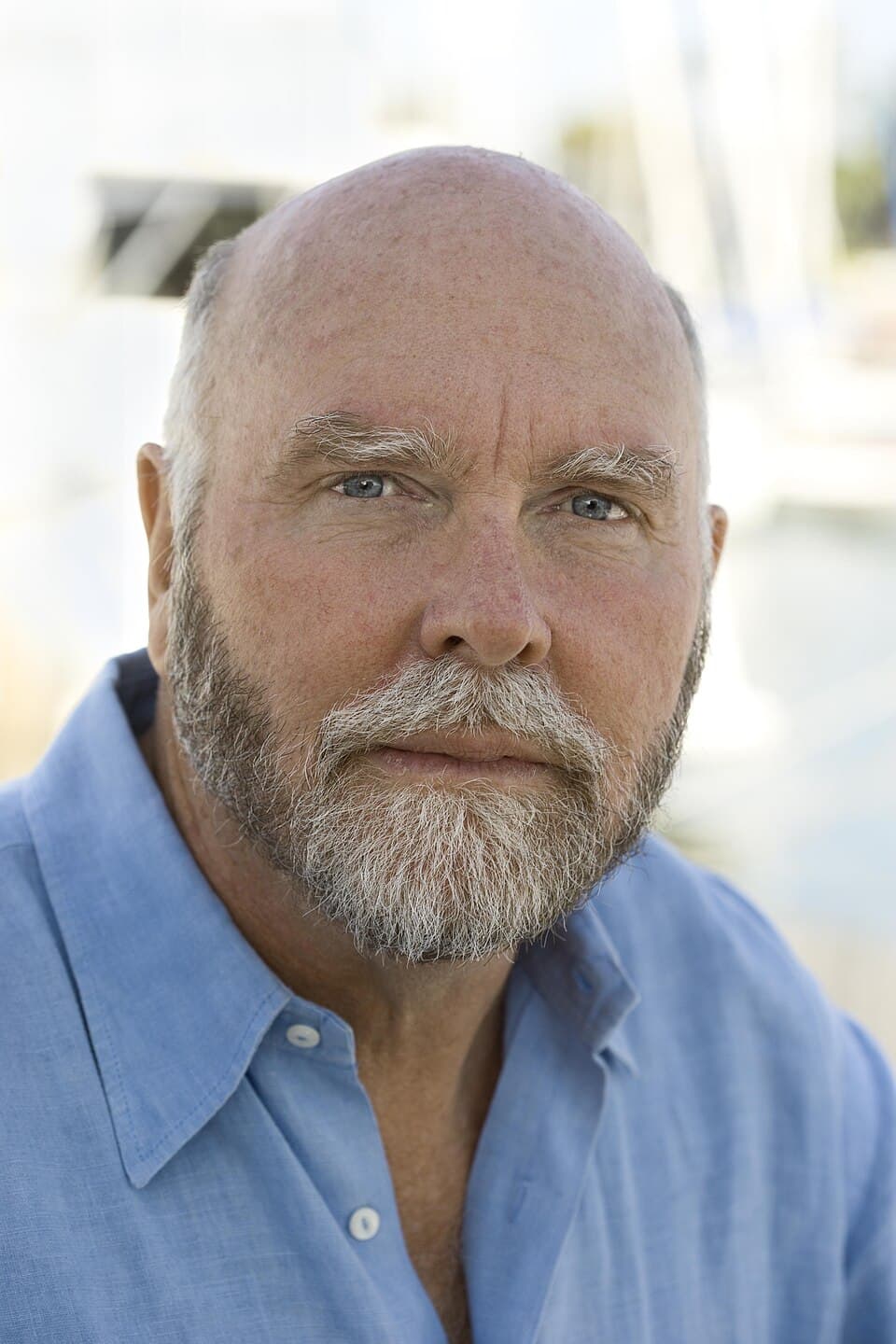
Craig Venter is one of the most consequential — and controversial — figures in modern biology. He raced a government-funded consortium to sequence the human genome, founded multiple biotech companies, sailed the world's oceans to catalog microbial life, and built the first self-replicating synthetic cell. No single career has done more to push the boundaries of what it means to read, and then write, the code of life.
From Vietnam to the Laboratory
Venter's path to science was anything but conventional. Born in Salt Lake City in 1946, he was an indifferent student who spent more time surfing than studying. At 21, he was drafted and served as a medic in the Vietnam War, an experience that profoundly shaped him. Surrounded by death and trauma in a field hospital in Da Nang, Venter developed a fierce urgency about life — and a determination to do something meaningful with his own.
After returning from Vietnam, he enrolled at the University of California, San Diego, earned a PhD in physiology and pharmacology, and joined the National Institutes of Health (NIH). There, he developed a rapid method for identifying genes using expressed sequence tags (ESTs), which could pinpoint active genes far faster than traditional sequencing. The NIH's controversial attempt to patent these gene fragments ignited a fierce debate about who owns the human genome — a debate that would follow Venter for decades.
The Race to Sequence the Human Genome
In 1998, Venter made one of the boldest bets in the history of science. He founded Celera Genomics and announced that he would sequence the entire human genome faster and cheaper than the publicly funded Human Genome Project (HGP), which had been working on the problem since 1990.
Venter's weapon was whole-genome shotgun sequencing, a method that shattered the genome into millions of small, overlapping fragments, sequenced them all simultaneously, and used powerful computers to reassemble the pieces. The HGP's leaders, including Francis Collins, dismissed the approach as reckless, arguing that the human genome was too large and repetitive for shotgun methods to work reliably.
They were wrong — or at least, not entirely right. By 2000, both Celera and the HGP had produced draft sequences of the human genome. In a carefully staged diplomatic moment, President Bill Clinton hosted Venter and Collins at the White House in June 2000 to announce the achievement jointly. "Today we are learning the language in which God created life," Clinton declared. The simultaneous publications followed in February 2001 — Celera's in Science, the HGP's in Nature.
The rivalry had driven both teams to finish years ahead of schedule. Venter's brash approach had forced a publicly funded, multi-billion-dollar international project to accelerate dramatically. Whether he was a visionary or a provocateur depended on whom you asked.
The J. Craig Venter Institute and the Quest for Synthetic Life
After leaving Celera in 2002, Venter turned to an even more ambitious goal: creating life from scratch. He founded the J. Craig Venter Institute (JCVI), a nonprofit research organization dedicated to genomic research, and set about building a synthetic genome.
The challenge was enormous. To create a synthetic organism, Venter's team needed to chemically synthesize an entire genome — letter by letter — assemble it into a functioning chromosome, and transplant it into a living cell where it would take over and direct the cell's machinery.
In 2010, after more than a decade of work and an estimated 40 million dollars in funding, the JCVI team succeeded. They created Mycoplasma mycoides JCVI-syn1.0 — the first self-replicating cell controlled entirely by a synthetic genome. The team had synthesized the bacterium's 1.08-million-base-pair genome from chemicals, assembled it in yeast, and transplanted it into a recipient cell whose own DNA had been removed. The synthetic cell booted up, began dividing, and produced colonies of cells indistinguishable from the natural organism.
To prove the genome was truly synthetic, Venter's team embedded watermarks in the DNA — coded messages including a quote from James Joyce, a URL, and the names of the researchers. It was a statement as much as it was science: humans could now write DNA from scratch and bring it to life.
The Minimal Genome: What Is Essential for Life?
Having proved that synthetic genomes could work, Venter pursued a deeper question: what is the smallest set of genes needed to sustain life? By systematically stripping genes from the synthetic Mycoplasma genome, the JCVI team created syn3.0 in 2016 — a minimal cell with just 473 genes and 531,000 base pairs, making it the simplest self-replicating organism ever constructed.
Remarkably, about a third of syn3.0's genes had unknown functions. Even in the simplest possible living cell, biology harbored deep mysteries. The finding humbled the field and underscored how much remains to be learned about the fundamental machinery of life.
Sailing the Oceans: The Global Ocean Sampling Expedition
Between his genome sequencing and synthetic biology work, Venter embarked on one of the most ambitious environmental genomics projects ever attempted. From 2003 to 2007, he sailed his yacht Sorcerer II around the world, collecting ocean water samples every 200 miles and sequencing the microbial DNA within them.
The Global Ocean Sampling (GOS) expedition discovered millions of previously unknown genes and thousands of new protein families, vastly expanding our understanding of marine microbial diversity. The data revealed that the oceans harbor far more genetic diversity than anyone had imagined and provided a treasure trove of enzymes and biological pathways that researchers continue to mine for biotechnology applications.
Controversy and Ego
No account of Craig Venter is complete without acknowledging the controversy that has trailed him throughout his career. Critics have called him a self-promoter who prioritized speed over rigor, a privatizer who tried to patent the common heritage of humanity, and an egotist who named his institute after himself and used his own DNA as the reference genome for Celera's sequencing effort.
There is truth in some of these charges. Venter has never been modest, and his confrontational style alienated many colleagues. The intellectual property battles around genome sequencing raised legitimate concerns about access and equity in genomics. But even his fiercest critics acknowledge that Venter's competitive drive accelerated the pace of genomic science by years, and his synthetic biology work opened a field that did not previously exist.
Recent Developments (2025–2026)
Venter remains active through JCVI and new ventures. His latest spinoff, Diploid Genomics Inc., combines advanced AI models with the latest genomic sequencing technology and health imaging data to deliver diagnostic insights with higher precision — applying AI to the genomic data he pioneered collecting.
JCVI has developed methods to efficiently construct single-copy human artificial chromosomes (HACs), enabling scientists to work with mammalian genetic systems in ways previously only available in bacteria and yeast. The institute is expanding its facilities, with a new advanced human genome sequencing facility planned in a new building expected to open in 2026.
JCVI continues to co-organize the SynBYSS Conference, with the 2nd International edition scheduled for June 2026 in Barcelona — highlighting the growing global synthetic biology community that Venter helped create.
Research Lab & Companies
- J. Craig Venter Institute (JCVI) — Founder (synthetic biology, genomics)
- Diploid Genomics — Founder (AI-driven genomic diagnostics, latest venture)
- Human Longevity Inc. — Co-founder (health data and genomics)
- Synthetic Genomics (now Viridos) — Co-founder (algae biofuels)
- Celera Genomics — Founder (human genome sequencing, 1998–2005)
Legacy in Synthetic Biology
Craig Venter's legacy is inseparable from the arc of synthetic biology itself. By demonstrating that genomes could be designed and built from chemical components, he established the foundational proof of concept for an entire discipline. Today, synthetic biologists designing engineered organisms, building gene circuits, and programming cells to produce medicines, materials, and fuels are all working in a tradition that Venter helped create.
His work also raised questions that the field continues to grapple with: Who should have the power to create new life forms? How should synthetic organisms be regulated? What responsibilities come with the ability to write DNA?
Venter did not answer all of these questions. But by turning them from philosophical hypotheticals into urgent practical realities, he changed biology forever.

