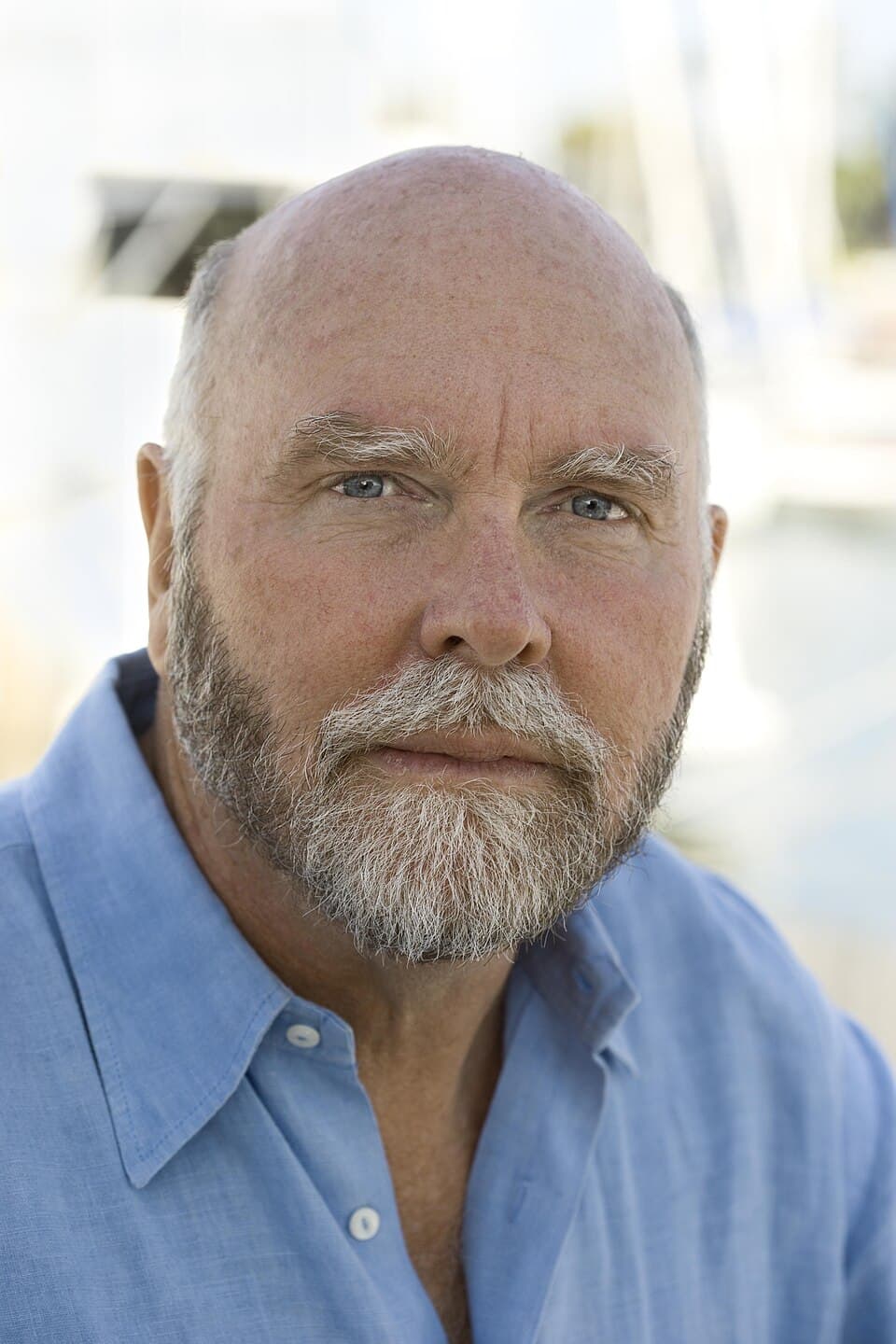
Synthetic biology has no shortage of visionaries, but Jason Kelly is the one who bet that the field's future depended on scale. As co-founder and CEO of Ginkgo Bioworks, Kelly built the world's largest platform for programming living cells — a biological foundry that treats organism engineering the way a semiconductor foundry treats chip manufacturing. The ambition is enormous: replace chemical manufacturing with biological manufacturing, one engineered organism at a time.
Learning at the Feet of Synthetic Biology's Founders
Jason Kelly's journey begins at MIT, where he earned his PhD in biological engineering under the supervision of Tom Knight — widely regarded as one of the founding figures of synthetic biology. Knight, a veteran computer scientist who had turned to biology, was among the first to argue that living systems could be engineered with the same discipline applied to electronic circuits. His lab was a crucible for the ideas that would define the field.
Kelly was one of five graduate students from Knight's lab who decided to turn those ideas into a company. In 2009, Kelly, along with Reshma Shetty, Barry Canton, Austin Che, and Tom Knight himself, founded Ginkgo Bioworks in a small lab in Boston. The company's founding thesis was deceptively simple: biology is the most advanced manufacturing technology on the planet, but nobody has built the infrastructure to use it at scale.
The Organism Company
From the beginning, Ginkgo positioned itself not as a company that made any single product, but as a platform — "the organism company." The idea was to build a general-purpose cell programming facility that could engineer microorganisms for any client and any application: fragrances, flavors, pharmaceuticals, agriculture, industrial chemicals, and beyond.
This horizontal platform model was inspired by the semiconductor industry. Just as companies like TSMC manufacture chips designed by other firms, Ginkgo would engineer organisms designed for its partners. A cosmetics company that wanted a sustainable fragrance ingredient could come to Ginkgo. A pharmaceutical firm that needed a microbe to produce a drug precursor could come to Ginkgo. An agricultural company that wanted nitrogen-fixing bacteria could come to Ginkgo. The organism would change; the platform would stay the same.
The Foundry: Biology's Assembly Line
The heart of Ginkgo's operation is its Foundry — a massive, highly automated facility in Boston where robots and software manage the design, building, and testing of engineered organisms at a scale no academic lab could match. The Foundry runs millions of genetic experiments per year, using automated liquid handling, high-throughput screening, and machine learning to iterate through organism designs far faster than traditional approaches.
The design-build-test-learn cycle is the core workflow. Ginkgo's engineers design genetic modifications using computational tools, build the modified organisms using automated DNA assembly, test their performance with high-throughput assays, and feed the results back into machine learning models that guide the next round of designs. Each cycle produces data that makes the next cycle more efficient — a flywheel effect that is central to Ginkgo's strategy.
By 2023, the Foundry had grown to over 100,000 square feet of automated lab space across multiple facilities, making it the largest synthetic biology platform in the world.
Key Partnerships and Commercial Growth
Ginkgo's platform model attracted partnerships across industries. The company worked with Bayer on agricultural biologicals, engineering microbes that could protect crops or enhance soil health. It partnered with Roche subsidiary Genentech on mammalian cell engineering for drug production. It collaborated with Synlogic on living therapeutics — engineered bacteria designed to treat metabolic diseases from inside the gut.
In the fragrance and flavor space, Ginkgo worked with companies like Robertet to produce high-value ingredients through fermentation rather than extraction from scarce natural sources. In industrial biotechnology, it engineered organisms to produce enzymes, specialty chemicals, and materials.
Each partnership followed the same model: Ginkgo provided the platform and the engineering capability; the partner provided the domain expertise and the market access. Revenue came from a combination of upfront fees, milestone payments, and downstream royalties — though the company's path to profitability proved slower than early investors hoped.
Going Public and Market Realities
In September 2021, Ginkgo went public through a merger with a special purpose acquisition company (SPAC), valuing the company at approximately 15 billion dollars at its peak. The IPO made Ginkgo the most valuable pure-play synthetic biology company in the world and brought unprecedented attention to the field.
But the public markets proved less patient than venture capitalists. As the broader biotech and SPAC sectors declined through 2022 and 2023, Ginkgo's stock price fell sharply — losing more than 90 percent of its peak value. Critics pointed to the company's significant operating losses, its dependence on a small number of large partnerships, and questions about whether the platform model could generate returns quickly enough to justify its valuation.
Kelly responded by focusing on operational efficiency, reducing headcount, and narrowing the company's focus to its highest-value programs. In 2023, Ginkgo acquired Zymergen, a rival synthetic biology platform that had itself stumbled after going public, absorbing its technology and talent at a fraction of its former value.
The COVID Pivot and Biosecurity
When the COVID-19 pandemic hit in 2020, Ginkgo pivoted rapidly to biosecurity. The company launched a massive testing operation, processing millions of COVID tests for schools, workplaces, and government agencies. It also spun out Concentric by Ginkgo, a biosecurity division focused on pathogen monitoring and early warning systems.
Concentric developed wastewater surveillance programs that could detect the presence of pathogens — including SARS-CoV-2, influenza, and RSV — in community wastewater before clinical cases were reported. The system provided an early warning capability that traditional disease surveillance could not match and attracted contracts from the CDC and state health departments.
For Kelly, biosecurity was not a side project but a natural extension of Ginkgo's mission. If biology was becoming an engineering discipline, then the world needed infrastructure to monitor and respond to biological threats, whether natural or engineered. Concentric represented Ginkgo's bet that biosecurity would become a permanent, growing market.
The Vision: Biology Replaces Chemistry
Kelly's long-term vision is sweeping. He argues that biology will eventually replace chemical manufacturing across a wide range of industries, just as semiconductors replaced vacuum tubes. Microorganisms can be programmed to produce molecules that are currently synthesized through energy-intensive, pollution-generating chemical processes. Fermentation tanks can replace petrochemical plants. Living cells can serve as microscopic factories, running on sugar instead of petroleum.
The transition will not happen overnight, and Kelly is the first to acknowledge that Ginkgo's path has been harder and slower than he initially expected. Biological systems are inherently more complex and unpredictable than electronic circuits. Organisms mutate, evolve, and behave in ways that confound engineering expectations. Scaling a process from a lab flask to an industrial bioreactor introduces challenges that no amount of automation can fully eliminate.
But Kelly remains convinced that the underlying economics are on biology's side. As DNA synthesis becomes cheaper, as machine learning models improve, and as Ginkgo's platform accumulates more data from more programs, the cost of engineering a new organism continues to fall. Each generation of the Foundry is faster and more capable than the last.
A Builder in a Field of Dreamers
Jason Kelly occupies a unique position in synthetic biology. He is neither the field's most famous scientist nor its most celebrated inventor. What he has built is something different: the infrastructure. Ginkgo Bioworks is the factory floor of the synthetic biology revolution — the place where engineered organisms go from concept to reality at industrial scale.
Recent Developments (2025–2026)
Kelly navigated Ginkgo through a significant strategic pivot in 2025–2026. After the stock declined from its peak $15B SPAC valuation, the company focused on "autonomous labs" — combining robotics, AI, and automation for biological engineering at scale. In Q4 2025, Kelly called it a "breakout quarter," reducing annual cash burn by 55% from 2024 to 2025.
In January 2026, Kelly assumed direct oversight of operations after COO Reshma Shetty's transition, and announced the spinoff of Ginkgo's biosecurity business (Concentric) to bring in outside investment while retaining a minority stake. The company is building a "frontier autonomous lab" in Boston and guided 2026 cash burn of $125–150M as it balances investment with cost discipline.
Research Lab & Companies
- Ginkgo Bioworks (DNA) — Co-founder and CEO
- Concentric by Ginkgo — Biosecurity monitoring (being spun off)
- Zymergen — Acquired by Ginkgo in 2022
- MIT Synthetic Biology background — PhD with Tom Knight
The company's stock struggles and financial challenges are real, and the market's verdict on Ginkgo's business model remains uncertain. But the platform Kelly built — the Foundry, the data, the partnerships, the biosecurity capabilities — represents the most ambitious attempt yet to turn synthetic biology from a laboratory science into an industrial reality. Whether Ginkgo ultimately becomes the TSMC of biology or a cautionary tale about scaling too fast, Jason Kelly's bet on infrastructure has already reshaped the field.