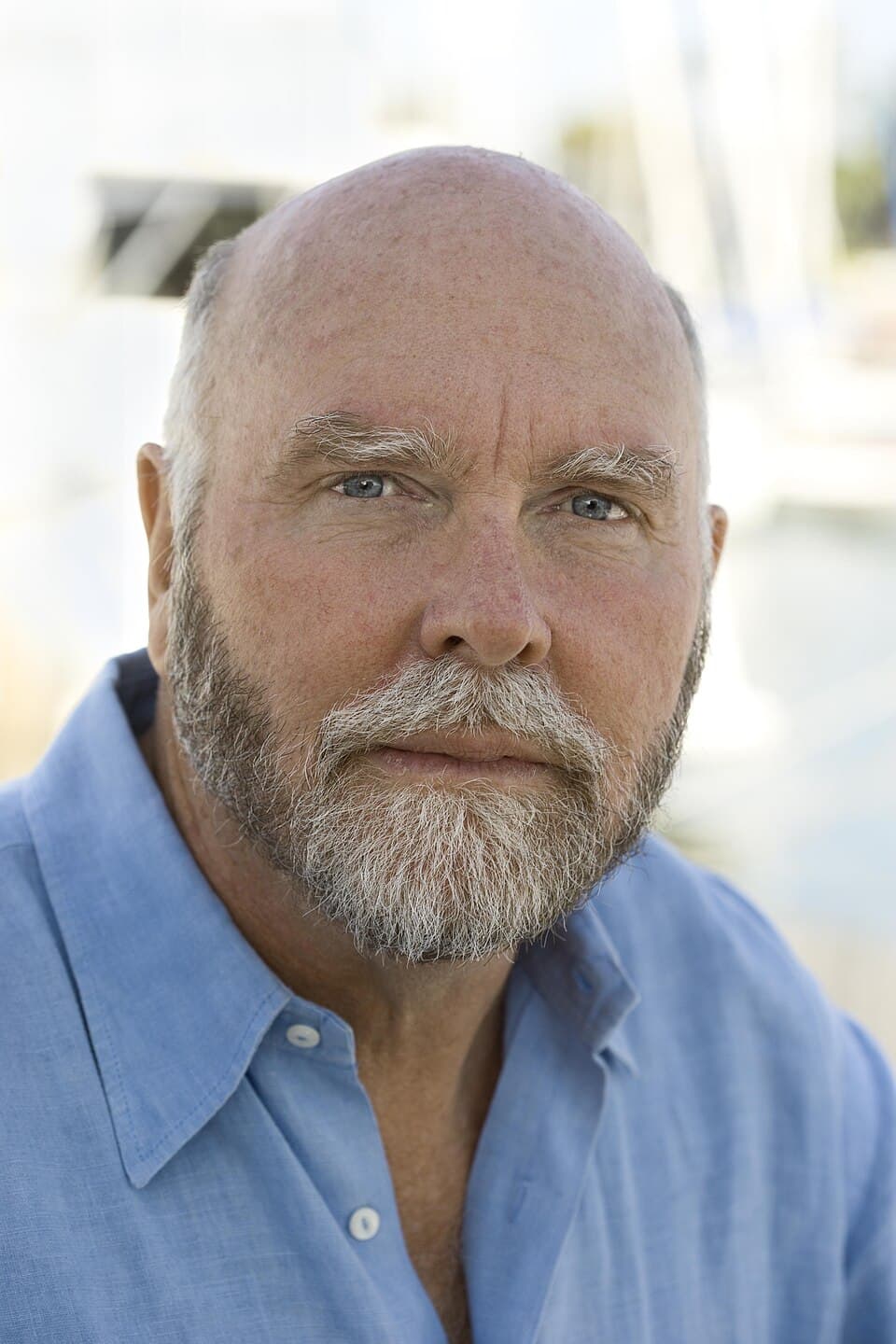
If Craig Venter proved that genomes could be built from scratch, Drew Endy asked a different and equally radical question: could biology be engineered with the same rigor, modularity, and openness as software? Over the past two decades, Endy has been the most influential advocate for treating biology as a true engineering discipline — one with standardized parts, open-source principles, and a global community of builders. His ideas have shaped the foundations of synthetic biology and inspired a generation of scientists who think of DNA not as something to merely study, but as something to design.
From MIT to Stanford: An Engineer's View of Biology
Drew Endy trained as a civil and environmental engineer before turning to biology, and that engineering sensibility has defined his entire career. After completing his PhD at Dartmouth, he joined MIT's biological engineering faculty, where he became one of the founding voices of synthetic biology in the early 2000s.
At the time, molecular biology was largely a discovery science. Researchers studied natural systems, mapped genes, and tried to understand how organisms worked. Endy saw something different: a field ripe for engineering. Just as electrical engineers had standardized components like resistors, capacitors, and transistors — allowing anyone to build complex circuits from interchangeable parts — Endy believed that biology needed its own set of standard, interchangeable components.
In 2008, Endy moved to Stanford University, where he continues to lead research in biological engineering and serve as a vocal advocate for the principles he helped establish.
BioBricks: Standardized DNA Parts Like Lego
The most tangible expression of Endy's vision was the BioBrick standard, introduced in the early 2000s. A BioBrick is a standardized DNA sequence — a promoter, a ribosome binding site, a coding sequence, a terminator — designed with defined flanking sequences so that any BioBrick can be physically assembled with any other BioBrick using a simple, universal protocol.
The analogy to Lego bricks is deliberate. Just as Lego pieces snap together because they share a common interface, BioBricks can be combined in any order because they share standardized assembly junctions. A student in Nairobi can take a BioBrick promoter, attach it to a BioBrick coding sequence from a lab in Boston, and the parts will physically fit together without custom engineering.
The BioBrick standard was not just a technical specification. It was a philosophical statement: biology could be made modular, composable, and accessible. It challenged the prevailing culture in molecular biology, where every lab maintained its own collection of plasmids, cloning methods, and idiosyncratic protocols that made it difficult to share or reuse genetic parts across groups.
The Registry of Standard Biological Parts
To make BioBricks useful, they needed to be cataloged and shared. Endy helped establish the Registry of Standard Biological Parts, hosted at MIT, which grew into one of the most important resources in synthetic biology. The Registry is an open, community-curated collection of thousands of BioBrick parts, each with documented sequences, functions, and assembly instructions.
The Registry embodies Endy's commitment to open-source biology. Unlike proprietary gene databases behind paywalls, the Registry is freely available to anyone. Researchers and students can browse the catalog, order physical DNA, and contribute new parts back to the collection. It is, in effect, the GitHub of genetic engineering — a shared repository where biological components can be forked, improved, and recombined.
Co-Founding iGEM: A Global Movement
Perhaps Endy's most far-reaching contribution has been the International Genetically Engineered Machine (iGEM) competition, which he co-founded in 2003 with Tom Knight and Randy Rettberg at MIT. What started as a small MIT course project has grown into the world's largest synthetic biology competition, with over 6,000 teams from more than 60 countries participating annually.
Each year, iGEM teams of undergraduate and high school students design and build biological systems using BioBrick parts from the Registry. Projects range from biosensors that detect arsenic in drinking water to engineered bacteria that break down plastic, from living therapeutics to sustainable dyes produced by microbes. At the end of the season, teams present their work at the iGEM Grand Jamboree, a massive gathering that has become the annual pulse of the synthetic biology community.
iGEM has done more than produce impressive student projects. It has trained tens of thousands of young scientists in the principles of biological engineering, created a global network of synthetic biology practitioners, and demonstrated that meaningful biological engineering can be done outside of elite research institutions. Many of the leaders of today's synthetic biology companies — including some at Ginkgo Bioworks, Zymergen, and numerous startups — got their start on iGEM teams.
Open-Source Biology and the Fight Against Enclosure
Endy has been the most prominent voice in synthetic biology arguing that the field's foundational tools and components should remain open and accessible. He has drawn explicit parallels to the open-source software movement, arguing that just as Linux and the World Wide Web flourished because their core components were free and open, synthetic biology will reach its full potential only if its basic building blocks are not locked behind patents and proprietary restrictions.
This stance has sometimes put Endy at odds with the commercial biotech world, where intellectual property is the primary mechanism for capturing value. But Endy argues that openness and commerce are not incompatible — that companies can build proprietary products and services on top of open platforms, just as countless businesses have been built on open-source software.
He has also been involved in efforts to establish responsible frameworks for sharing biological materials, working with organizations like the BioBricks Foundation to develop legal and ethical standards for open-source biology.
DARPA, Biosecurity, and Ethical Frameworks
Endy's influence extends well beyond academia. He has advised DARPA's Living Foundries program, one of the largest government investments in synthetic biology, which aimed to develop tools for rapidly engineering biological systems for defense and industrial applications. The program helped establish many of the automated design-build-test workflows that now underpin commercial synthetic biology.
At the same time, Endy has been a leading voice on biosecurity and the ethical dimensions of engineering life. He has argued that the synthetic biology community must proactively address the dual-use risks of its technologies — the possibility that tools designed to engineer beneficial organisms could also be used to create dangerous ones. He has called for transparency, community self-governance, and international cooperation as the foundations of responsible innovation.
Endy's ethical advocacy is not abstract philosophizing. He has participated in major national and international discussions about the governance of gene drives, the regulation of synthetic organisms, and the societal implications of engineering biology. His consistent message is that the people building the technology must also be the ones leading the conversation about its responsible use.
A Legacy of Principles
Drew Endy did not create the first synthetic organism or win a Nobel Prize. His legacy is different and arguably just as important: he established the principles that allow synthetic biology to function as an engineering discipline. Standardization. Modularity. Openness. Community.
The BioBrick standard showed that biological parts could be made interchangeable. The Registry demonstrated that those parts could be shared globally. iGEM proved that a worldwide community could be built around the idea of engineering biology. And Endy's relentless advocacy for openness and responsibility helped set the cultural norms for an entire field.
Recent Developments (2025–2026)
Endy continues as the Martin Family University Fellow in Undergraduate Education in Bioengineering at Stanford and co-director of degree programs for the Hasso Plattner Institute of Design (d.school). In February 2025, he testified before the U.S.-China Economic and Security Review Commission on biosecurity and synthetic biology competition. In February 2026, he was featured on 60 Minutes discussing the importance of iGEM and democratized biotechnology.
He remains President and Director of the BioBricks Foundation and Director of both the iGEM Foundation and the BioBuilder Educational Foundation — continuing his mission to make biology an accessible engineering discipline for students and innovators worldwide.
Research Lab & Companies
- Stanford University — Bioengineering Department, d.school Co-director
- BioBricks Foundation — President and Director
- iGEM Foundation — Director (6,000+ student teams globally)
- BioBuilder Educational Foundation — Director
- Hoover Institution — Visiting Fellow (biosecurity policy)
Today, as synthetic biology moves from laboratory curiosity to industrial reality, the principles Endy championed are woven into the fabric of the discipline. Every time a researcher grabs a standardized genetic part from a shared repository, every time a student designs a biological system from modular components, every time a policy discussion about synthetic biology begins with the assumption that openness matters — Drew Endy's fingerprints are there.