Andrew Huberman
Stanford neuroscientist turned longevity popularizer
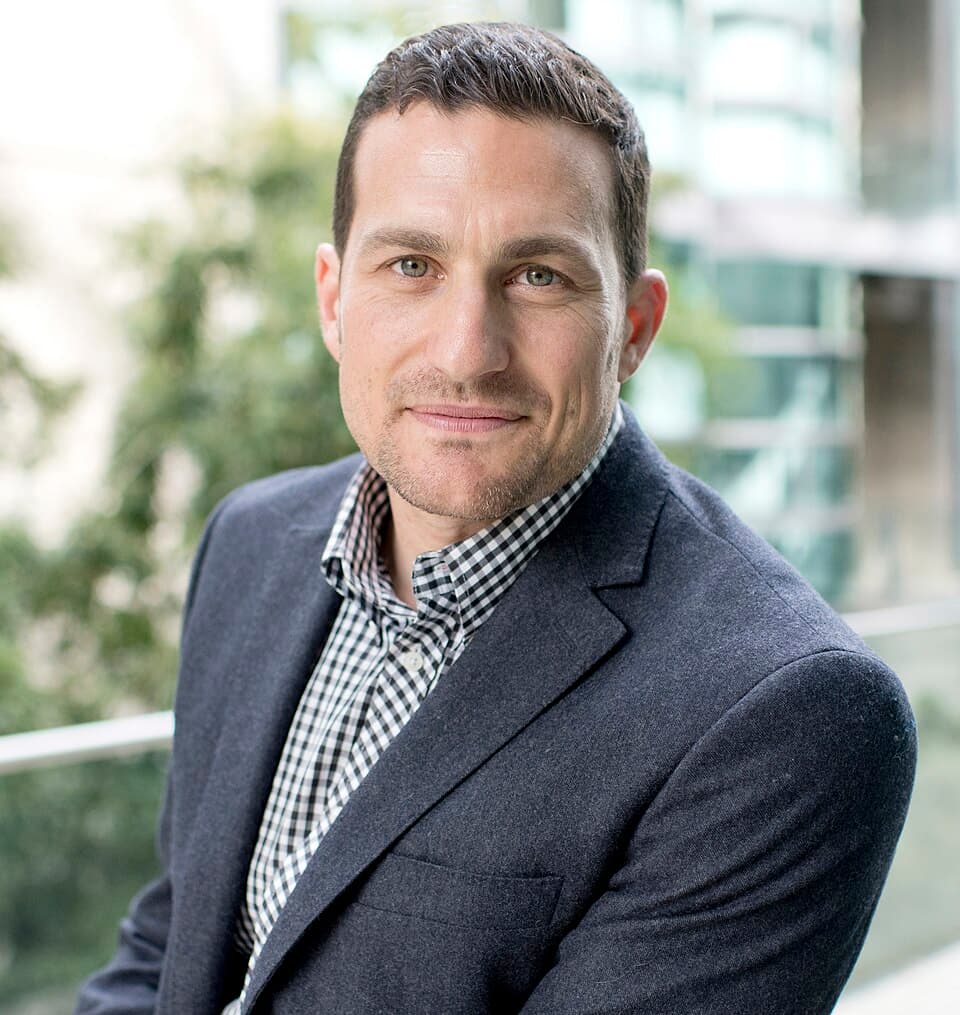
Bio
Andrew Huberman is a tenured Stanford neuroscience professor who became one of the most influential science communicators in the world through his podcast Huberman Lab, which regularly ranks in Apple's top 5 shows. His episodes are dense, multi-hour deep dives on topics ranging from sleep architecture to dopamine dynamics to supplement protocols. He is the only figure on this page who is simultaneously an active research scientist and a mass-audience popularizer.
Background
Huberman completed his PhD at UC Davis studying visual system development and joined Stanford as a faculty member in 2016. His lab's published research focuses on neural regeneration, visual circuits, and stress physiology — not directly on longevity or gene editing. He launched the Huberman Lab podcast in January 2021; it grew explosively and became his dominant public identity by 2023.
What They Do
Huberman's podcast translates peer-reviewed neuroscience and adjacent fields into actionable 'protocols' — specific, timed behavioral interventions (morning sunlight, NSDR naps, cold exposure, caffeine timing). He interviews leading scientists and synthesizes their work for a general audience. He also promotes specific supplement stacks through his partnerships, which has attracted the most criticism.
Research Record
Huberman has a legitimate research career with ~30 peer-reviewed publications, primarily on visual system neuroscience. His lab's work on ipRGCs and optic nerve regeneration is well-respected within its niche. However, none of his primary research is on longevity, aging, gene editing, or the topics he most frequently discusses on his podcast — an important distinction for listeners.
Our Evidence Summary
Huberman occupies a unique middle ground: a real scientist whose public recommendations sometimes outpace the evidence. Many of his core protocols (morning sunlight for circadian alignment, sleep hygiene, consistent exercise) are well-supported. Others (specific supplement stacks, some cold exposure claims, fenugreek for testosterone) overstate what the research actually shows. His protocols are often presented with more certainty than the underlying studies warrant, and journalistic reporting in 2024 raised questions about conflicts of interest with supplement sponsors.
Claim-by-Claim Evidence Review
Morning sunlight exposure anchors circadian rhythm and improves sleep
Well-established circadian biology. Light is the dominant zeitgeber for the human suprachiasmatic nucleus. Morning bright-light exposure is a cornerstone intervention for delayed sleep phase and jet lag.
Non-Sleep Deep Rest (NSDR) / yoga nidra improves recovery and focus
Some small studies support benefits of NSDR-style practices for recovery and cognition. The specific 10-20 minute protocols Huberman recommends are reasonable extrapolations but not rigorously tested.
Cold exposure (cold plunges, ice baths) boosts dopamine and metabolism
Cold exposure does acutely raise norepinephrine and dopamine, but the longevity and metabolic benefits at the intensity Huberman recommends are not well-supported by human RCTs. A 2023 systematic review found benefits for mood but weak evidence for metabolic or longevity outcomes.
Specific supplement stacks improve testosterone, sleep, and focus
Most of the specific supplement protocols Huberman has discussed (tongkat ali, fadogia agrestis, apigenin) have very limited human trial data. Some have only animal studies. This is the area where his recommendations most consistently outrun the evidence.
Caffeine timing (delay 90-120 minutes after waking) improves alertness
Based on a reasonable mechanistic argument about adenosine clearance, but the practice has very little direct human evidence. Probably not harmful, but the certainty Huberman expresses exceeds the data.
Deliberate heat exposure (sauna) reduces cardiovascular mortality
The Finnish KIHD cohort study shows a strong association between sauna use and reduced cardiovascular mortality. Causality is not proven (observational data), but the mechanistic story is coherent.
Huberman's podcast represents peer-reviewed scientific consensus
Listeners should understand that Huberman synthesizes and interprets research — he is not reporting settled consensus. His confidence sometimes exceeds what the underlying studies support. Treat protocols as hypotheses to consider, not clinical recommendations.
Related Reading
Biological Age vs Chronological Age: What's the Difference and Why It Matters
You might be 45 years old but biologically 38 — or 52. Biological age measures how fast your body is actually aging, and it can be changed. Here's how to measure and improve yours.
The Longevity Diet: What Science Actually Says About Eating to Live Longer
Blue Zones, Mediterranean diet, caloric restriction, intermittent fasting — what does the research actually show about eating for a longer life? Here's the evidence, minus the hype.
The 12 Hallmarks of Aging: A Complete Guide
The 12 hallmarks of aging provide a scientific framework for understanding why we age and where interventions might slow or reverse the process.