Imagine you are seven years old and a sharp, all-over pain wakes you in the middle of the night. Your bones ache as if someone is squeezing them from the inside. Your parents rush you to the emergency room — again. This is life with sickle cell disease, one of the most common serious inherited blood disorders in the world.
Now imagine that somewhere inside your own DNA, a set of working backup genes sits quietly in the off position. They made perfectly healthy blood when you were still in the womb. Scientists have just found a new way to flip those genes back on — without cutting a single strand of DNA.
A study published in Nature Communications by researchers at the University of New South Wales (UNSW) and St. Jude Children's Research Hospital, and covered by ScienceDaily in January 2026, describes exactly that: a CRISPR-based tool that removes chemical "off" tags from a key gene, waking it up and filling red blood cells with a form of hemoglobin that does not cause sickling. It is early research, but the concept is both elegant and backed by decades of biology.
What Is Sickle Cell Disease?
Sickle cell disease (SCD) is caused by a single letter change — one tiny typo — in the gene that builds the protein hemoglobin. Hemoglobin is the molecule inside red blood cells that carries oxygen from your lungs to every corner of your body.
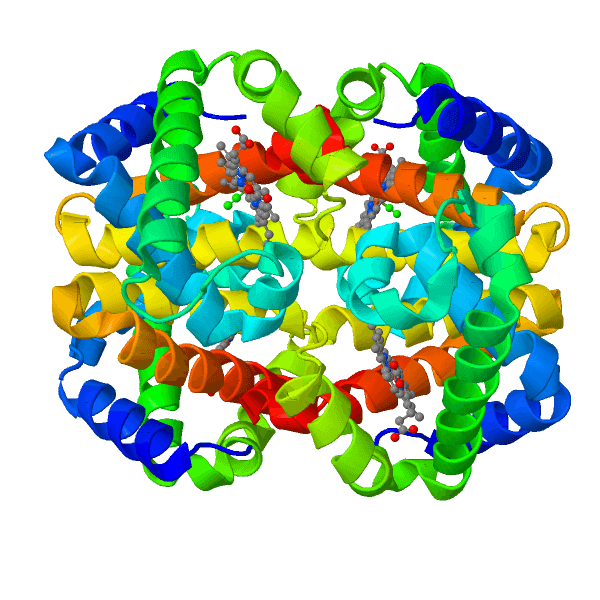
In a healthy person, the HBB gene produces a protein called beta-globin. Two beta-globin chains pair with two alpha-globin chains to form adult hemoglobin (HbA). The result is a round, flexible cell that slips easily through even the narrowest blood vessels.
In sickle cell disease, the HBB gene carries a point mutation at position 6: the amino acid glutamate is swapped for valine (Glu6Val). This tiny change makes hemoglobin molecules sticky when oxygen levels drop. They clump together into rigid rods that deform the red blood cell — stretching it into the crescent, or "sickle" shape that gives the disease its name.
Sickle-shaped cells are stiff and fragile. They clog small blood vessels, cut off oxygen to tissues, and cause the brutal pain crises that send patients to the emergency room. Over years, the repeated blockages damage the spleen, kidneys, lungs, and brain. Life expectancy in the United States is shortened by more than twenty years compared to the general population.
The numbers tell a heavy story: sickle cell disease affects more than 100,000 Americans, predominantly people of African descent, and an estimated 7.7 million people globally. Sub-Saharan Africa carries the greatest burden, with around 300,000 new births affected each year worldwide.
The Fetal Hemoglobin Secret
Here is the remarkable thing: babies with sickle cell disease are almost always healthy at birth. The pain crises, the strokes, the organ damage — none of that shows up right away. Why?
Because newborns run on different hemoglobin.
During fetal development, the body uses a different set of genes — HBG1 and HBG2 — to make fetal hemoglobin, or HbF. Instead of beta-globin chains, HbF uses gamma-globin chains. These chains do not have the mutation. More importantly, gamma-globin chains do not stick together the way mutant beta-globin does. HbF does not polymerize. It does not cause sickling.
In the weeks after birth, a genetic switch flips. The body stops reading HBG1 and HBG2 and starts relying almost entirely on HBB — the adult beta-globin gene. In most people, HbF drops to less than 1% of total hemoglobin within the first year of life. For a baby with the sickle cell mutation, this switch is when their disease begins.
Nature has already run the experiment showing what happens when HbF stays high. Some people inherit variants that keep their HBG genes active into adulthood — a condition called hereditary persistence of fetal hemoglobin (HPFH). People with both the sickle cell mutation and HPFH often have mild symptoms or none at all. Their red blood cells still carry the broken HBB gene, but they are so full of HbF that the mutant hemoglobin never gets a chance to sickle.
The implication has been clear to scientists for decades: if you can reactivate the HBG genes in adults with sickle cell disease, you can effectively compensate for the broken HBB gene without ever fixing it. You solve the problem by promoting the backup.
Why Are the HBG Genes Switched Off?
The HBG genes are silenced after birth partly by a protein called BCL11A. Think of BCL11A as the foreman who walks the factory floor after the baby shift ends and tells the backup generators — the HBG genes — to stay off. Without BCL11A interference, the backup generators would keep humming.
BCL11A binds to specific spots in the HBG promoter region (the on-switch area upstream of the gene) and brings in other silencing machinery. One key part of that machinery involves the addition of chemical tags called methyl groups to specific locations in the DNA. These methylation marks act like padlocks on the promoter, locking the HBG genes in the off position without changing any DNA letters.
CRISPR Without Cutting
Most people think of CRISPR as molecular scissors — a tool that cuts DNA at a precise location. That cutting ability is powerful, but it also carries risks. Any time a double-strand break is made in DNA, the cell must repair it. Those repair processes can introduce errors, called indels, or, in rare cases, contribute to cancer-causing mutations.
A newer family of CRISPR tools skips the scissors entirely. In the January 2026 research, scientists used a modified CRISPR system as a delivery vehicle rather than a cutting tool. The "dead" version of Cas9 — a protein stripped of its cutting ability — was guided to the HBG gene promoter by a specially designed RNA sequence. There, it dropped off an enzyme that removes methyl groups from the DNA.
Think of it like this: the standard CRISPR tool is a scissors that cuts a padlock off. This new approach sends a tiny locksmith who quietly unlocks the padlock and pockets it — no cutting, no broken metal, no mess.
By stripping away the methylation tags on the HBG1 and HBG2 promoters, the researchers lifted the epigenetic brake. With the padlock gone, the gene's own machinery took over and started reading the HBG genes again, producing gamma-globin and, ultimately, fetal hemoglobin.
In laboratory experiments, this epigenetic editing successfully reactivated HbF production in blood stem cells, demonstrating that DNA methylation is not just a marker of gene silencing — it is an active driver of it. Removing it is enough to reverse the silencing.
Why No Cuts Means Fewer Risks
The safety argument for this approach is straightforward. When you do not cut DNA:
- There are no double-strand breaks that the cell must repair.
- There are no indels — small insertions or deletions that can accidentally disrupt other genes.
- There is no risk of the CRISPR guide RNA directing the enzyme to the wrong location and cutting elsewhere in the genome (off-target cutting).
- The original DNA sequence remains completely intact. Only the chemical decoration on top of the DNA changes — and that change is the goal.
As one researcher put it: "Whenever you cut DNA, there's a risk of cancer. And if you're doing a gene therapy for a lifelong disease, that's a bad kind of risk. But if we can do gene therapy that doesn't involve snipping DNA strands, then we avoid these potential pitfalls."
The patient experience would look similar to other stem cell gene therapies. Doctors would collect the patient's own blood stem cells — the cells in bone marrow that continuously produce new red blood cells — treat them in a lab with the epigenetic editing tool, and return the edited cells to the patient. Once back in the bone marrow, those cells would divide and produce red blood cells loaded with HbF.
How Is This Different From Casgevy?
The FDA approved Casgevy (exagamglogene autotemcel) in December 2023, making it the world's first approved CRISPR-based therapy. It also works by reactivating fetal hemoglobin — but it takes a different route.
Casgevy uses standard CRISPR-Cas9, which does cut DNA. It targets the erythroid-specific enhancer region of the BCL11A gene — essentially, the part of the foreman's instructions that tells him to silence red-blood-cell HBG genes specifically. By cutting and disrupting that region, Casgevy reduces BCL11A activity in red blood cells, which de-represses HBG and allows HbF to accumulate.
Both approaches end up at the same destination: more fetal hemoglobin in red blood cells. But they travel by different roads:
| Casgevy (approved) | Epigenetic editing (experimental) | |
|---|---|---|
| Mechanism | Cuts BCL11A enhancer; disrupts the repressor | Removes methylation from HBG promoter; directly activates the gene |
| DNA cuts | Yes — double-strand break made | No cuts; only chemical tags removed |
| Target | BCL11A (the repressor) | HBG1/HBG2 (the genes themselves) |
| Risk of indels | Yes, by design | None |
| Status | FDA-approved | Early-stage research |
Casgevy's clinical trial results are impressive — more than 97% of patients were free of severe pain crises for at least a year after treatment. But its cost (around $2.2 million per patient as of 2024), the complexity of the treatment, and the theoretical risks associated with any DNA-cutting approach have kept scientists working on alternatives.
The new epigenetic approach does not replace Casgevy. It represents a different philosophy — one that may ultimately prove safer, cheaper to manufacture, or more durable. It might also open doors to reaching the HBG genes in ways that work even when BCL11A disruption is not possible.
The Bottom Line
This research is still in early laboratory stages. The scientists demonstrated the concept in cell cultures and showed that removing methylation marks from the HBG promoter is sufficient to reactivate fetal hemoglobin. The next steps — testing in animal models, then eventually in carefully monitored human trials — will take years.
But the principle is sound, and the biology behind it is not new. The medical community has known for decades that high fetal hemoglobin levels protect against sickle cell disease. The question has always been how to safely restore those levels in adults. Every new approach that does so without cutting DNA moves the field toward answers that are both more effective and less risky.
For the more than 100,000 Americans and millions more worldwide living with sickle cell disease, the promise is real: your own genome already contains the instructions for making healthy blood. Science is getting better, every year, at simply reading them aloud again.
Source: Bell HW, Feng R, Shah M, et al. "Removal of promoter CpG methylation by epigenome editing reverses HBG silencing." Nature Communications 16, 6919 (2025). DOI: 10.1038/s41467-025-62177-z. Reported by ScienceDaily, January 4, 2026.


