Ben Greenfield
Biohacker whose peptide stacks outrun the peptide evidence
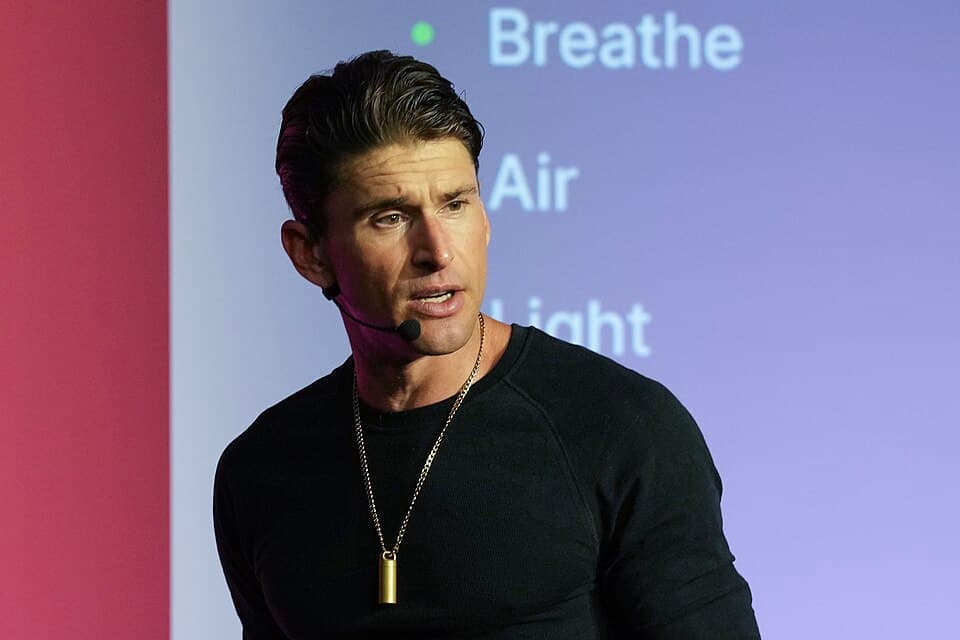
Bio
Ben Greenfield is one of the longest-running figures in the biohacker movement. A former triathlete and exercise physiologist, he writes and podcasts about peptides, supplements, fitness, PEMF, cold exposure, and just about every other intervention that can be tracked or purchased. His book Boundless is an encyclopedia of biohacker-tier interventions, and his platform features extensive affiliate arrangements with peptide, supplement, and device companies.
Background
Greenfield has a formal background in exercise physiology, with BS and MS degrees from the University of Idaho, and built an early coaching practice around endurance athletes. He pivoted to broad-spectrum biohacking content in the 2010s and now operates a large media and commerce platform, including his own supplement company Kion.
What They Do
Greenfield publishes high-volume content on peptide protocols, supplement stacks, and device-based biohacks. He describes his own use of BPC-157, tesamorelin, ipamorelin, CJC-1295, thymosin alpha-1, and many other peptides, typically with protocol specifics and affiliate links to sources. Unlike physicians, he has no prescribing authority and frequently discusses 'research chemical' pathways to compounds that have not been approved for the uses he describes. His exercise and nutrition advice tends to be more grounded in conventional sports science than his peptide content.
Research Record
Our Evidence Summary
Greenfield's exercise physiology and fitness advice is broadly reasonable and reflects his training. His peptide and biohacking content is the problem area: he routinely presents early-stage, mostly mechanistic or animal data as if it were clinically validated, and his commercial entanglements (supplement brand, affiliate links to peptide vendors) create material conflicts that are not always disclosed clearly. Listeners interested in peptides should not use his protocols as a substitute for peer-reviewed literature or a qualified clinician.
Claim-by-Claim Evidence Review
Structured exercise, strength training, and Zone 2 cardio are foundational to healthspan
This portion of Greenfield's advice reflects mainstream exercise physiology and is well supported by decades of research.
BPC-157 heals tendons and ligaments in humans at the doses he recommends
BPC-157 has interesting rodent data on tendon healing and gut protection. There are no adequately powered human RCTs demonstrating the benefits at the injection protocols biohackers use, and it is not an approved drug.
Tesamorelin and GHRH analogs reverse biological aging
Tesamorelin is FDA-approved for HIV-associated lipodystrophy and modestly raises IGF-1. Claims that it reverses biological age are extrapolations beyond the trial evidence and the approved indication.
Peptide stacks (BPC-157 + TB-500 + GHK-Cu + others) produce synergistic longevity benefits
No human trial evidence for stack synergy. This is effectively anecdote-driven n=1 protocol design promoted as if it were evidence-based medicine.
Grounding/earthing produces measurable health benefits
A handful of small studies exist but the field is methodologically weak. This is one of the areas where the biohacker content clearly runs ahead of credible evidence.
PEMF devices produce clinically meaningful longevity or recovery benefits
PEMF has some legitimate use cases (bone healing). Longevity and general-purpose recovery claims at the consumer-device level are poorly supported.
Cold exposure produces metabolic and longevity benefits
Acute physiological responses to cold are real; clinical longevity benefits at the protocols popular in biohacker circles are not well established.
Peptides marketed as 'research chemicals' are safe to self-administer
Grey-market peptides have no guarantee of purity, dose, or sterility. Sourcing compounds from research-chemical vendors for injection is a real safety risk that is downplayed in much of the biohacker content.
Related Reading
What Are Peptides? The Complete Beginner's Guide (2026)
A clear beginner's guide to what peptides are, how the body makes them, and why peptide therapeutics are transforming medicine in 2026.
BPC-157: What the Science Actually Says (2026 Evidence Review)
BPC-157 is everywhere in biohacker circles. A rigorous 2026 review of what the peer-reviewed evidence actually shows about this gastric peptide.
Peptides for Longevity: A Science-Based Beginner's Guide
A science-based beginner's guide to peptides for longevity — Epitalon, GHK-Cu, BPC-157, MOTS-c — honest evidence and the regulatory reality.
GHK-Cu: The Copper Peptide That Resets Gene Expression
GHK-Cu modulates thousands of genes toward a younger expression profile. What this copper peptide actually does — and what it doesn't.