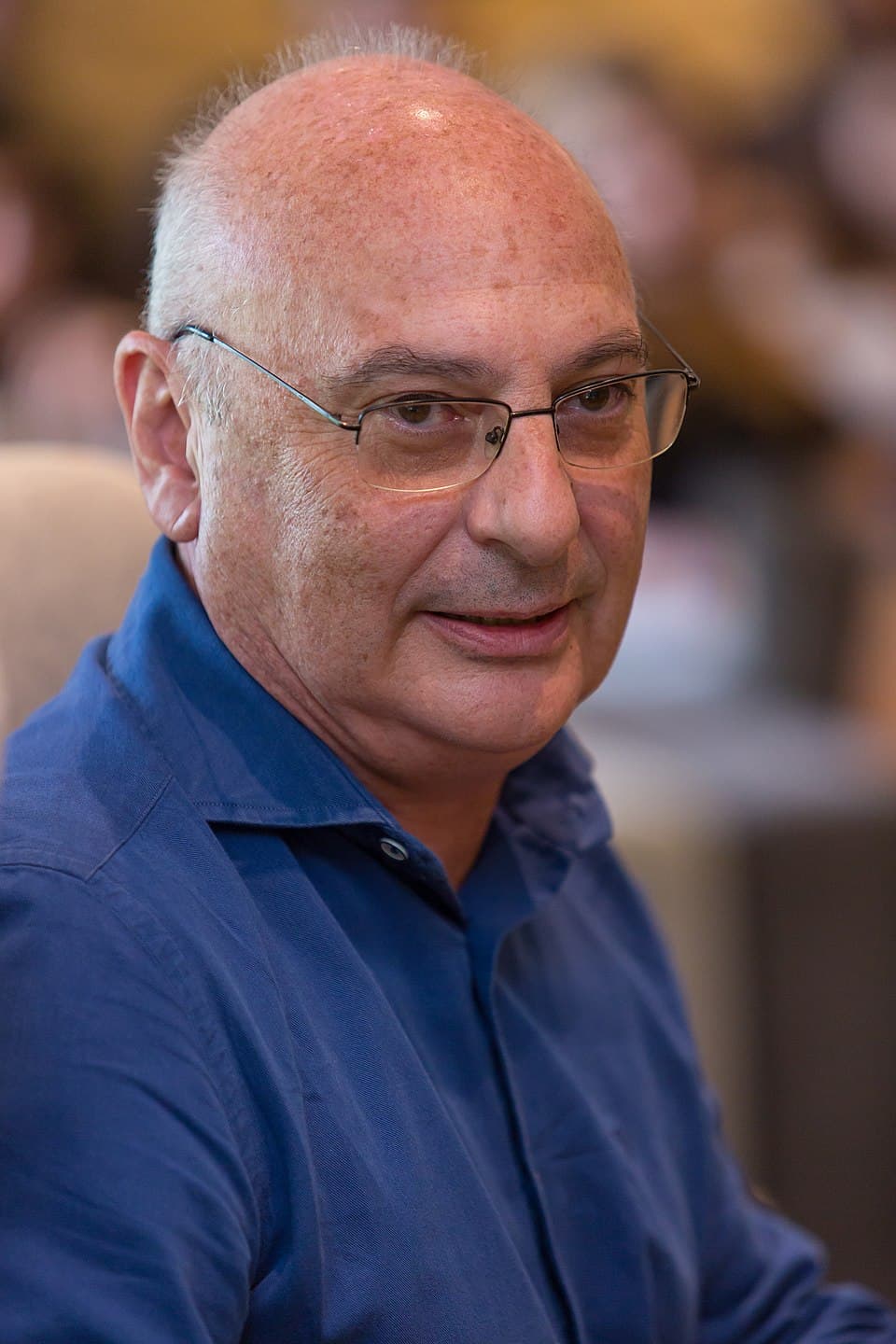
The CRISPR revolution has produced Nobel laureates, billionaire biotech founders, and household-name scientists. But the person who first noticed the mysterious repetitive sequences in microbial DNA, gave them the name CRISPR, and proposed that they function as an adaptive immune system spent years working in relative obscurity at a Spanish university, watching his papers get rejected by one journal after another. Francisco Juan Martinez Mojica is the unsung founder of the CRISPR field, and his story is both an inspiration and a cautionary tale about how science credits its discoverers.
Salt Marshes and Strange Sequences
Francisco Mojica was born in 1963 in Elche, a city in southeastern Spain known for its palm groves and Mediterranean climate. He studied biology at the University of Alicante, where he would spend virtually his entire career. For his doctoral research in the late 1980s and early 1990s, Mojica studied Haloferax mediterranei, a salt-loving archaeon (a type of single-celled organism distinct from bacteria) that thrives in the salt marshes and salterns near the coastal town of Santa Pola.
While analyzing the DNA of Haloferax, Mojica noticed something peculiar: the genome contained unusual clusters of repeated DNA sequences, each about 30 base pairs long, separated by unique spacer sequences of similar length. The pattern was striking -- like a genetic barcode with alternating repeat-spacer-repeat-spacer architecture. He described these sequences in his 1993 doctoral thesis, though he did not yet understand their function.
Naming CRISPR
Over the following years, Mojica discovered that similar repetitive sequences appeared in a wide variety of microbial genomes -- not just archaea, but also bacteria. Other researchers, including Japanese molecular biologist Yoshizumi Ishino, who had first inadvertently cloned such repeats from E. coli in 1987, had also noticed them, but no one had systematically cataloged their distribution or proposed a unifying name.
In 2001, Mojica and Ruud Jansen of Utrecht University in the Netherlands agreed to standardize the terminology. Previous names -- including TREP, SPIDR, and others -- were confusing and inconsistent. Mojica proposed the acronym CRISPR: Clustered Regularly Interspaced Short Palindromic Repeats. Jansen published the term in a 2002 paper, and the name stuck. Today, "CRISPR" is one of the most recognized terms in all of biology, and its origin traces back to a quiet collaboration between a Spanish microbiologist and a Dutch researcher.
The Immune System Hypothesis
The naming was important, but Mojica's most consequential insight came next. By the early 2000s, he had spent years systematically comparing the spacer sequences -- the unique DNA segments between the repeats -- against databases of known genomes. In 2003, he made a breakthrough: the spacers matched sequences from bacteriophages (viruses that infect bacteria) and other mobile genetic elements.
The implication was profound. If bacteria were incorporating fragments of viral DNA into their own genomes in a structured way, the CRISPR system might be functioning as an adaptive immune memory. When a bacterium survived a viral infection, it could store a snippet of the virus's DNA in its CRISPR array. If the same virus attacked again, the bacterium could use that stored sequence to recognize and destroy the invader.
Mojica wrote up his findings and submitted the paper to Nature. It was rejected. He sent it to the Proceedings of the National Academy of Sciences. Rejected again. Then to Molecular Microbiology and the Journal of Molecular Evolution. More rejections. Reviewers questioned the significance of the findings. Some suspected the sequence matches were coincidental.
A Delayed Publication
After more than a year of rejections, Mojica's paper was finally accepted by the Journal of Molecular Evolution and published in February 2005. Independently, a French group led by Alexander Bolotin and a team led by Christine Pourcel reached similar conclusions around the same time, with Pourcel's paper appearing in Microbiology in March 2005.
The delay was consequential. In science, priority often determines credit, and the repeated rejections cost Mojica precious time. Nonetheless, his 2005 paper is widely recognized as the first to clearly articulate the hypothesis that CRISPR functions as an adaptive immune system in prokaryotes. This idea was the conceptual foundation upon which the entire CRISPR gene editing revolution was built.
Experimental Confirmation and the Race Forward
In 2007, Philippe Horvath and Rodolphe Barrangou at the food science company Danisco (now part of DuPont) provided the first experimental proof that CRISPR is indeed an adaptive immune system, using Streptococcus thermophilus -- the bacterium used in yogurt production. Their work in Science confirmed Mojica's hypothesis and triggered an explosion of interest in CRISPR biology.
From that point, the field moved rapidly. In 2012, Doudna and Charpentier demonstrated that CRISPR-Cas9 could be programmed to cut DNA in vitro. In 2013, Feng Zhang and George Church showed it worked in mammalian cells. Companies were founded, patents were filed, and Nobel Prizes were awarded. But the foundational observation -- that CRISPR exists, that it has a pattern, and that it functions as an immune system -- belonged to Mojica.
The Nobel Prize That Did Not Come
When the 2020 Nobel Prize in Chemistry was awarded to Emmanuelle Charpentier and Jennifer Doudna for "the development of a method for genome editing," many in the scientific community expressed dismay that Mojica was not included. The Nobel Prize can be shared by up to three recipients, and there was a strong case that Mojica's discovery of CRISPR's biological function was essential to everything that followed.
Mojica himself has handled the omission with grace, expressing gratitude for other forms of recognition while acknowledging the disappointment. "It is a bit frustrating, of course," he told interviewers. "But I am proud that our work contributed to this revolution."
Recognition and the Albany Prize
While the Nobel eluded him, Mojica has received numerous other honors. In 2017, he shared the Albany Medical Center Prize in Medicine and Biomedical Research -- one of the largest prizes in American medicine -- with Charpentier, Doudna, Zhang, and Luciano Marraffini. He has also received the Jaime I Prize in Basic Research, Spain's most prestigious science award, and has been elected to international scientific academies.
At the University of Alicante, where he continues to work as a professor of microbiology, Mojica remains a beloved figure. His laboratory continues to study CRISPR biology in environmental microorganisms, exploring the diversity of CRISPR systems in nature and their ecological roles.
Recent Developments (2025–2026)
Mojica's lab at the University of Alicante continues to discover new CRISPR systems. In January 2026, his team identified AlCas12a, a novel enzyme that achieved 94% gene editing precision in laboratory tests. The enzyme has a dual DNA cutting capacity: cis cuts for targeted editing (like "molecular scissors") and trans cuts for non-specific degradation of single-stranded genetic material. Remarkably, AlCas12a maintains activity across temperatures from 20–45°C, making it compatible with organisms from bacteria to plants and animals.
He currently leads the EU-co-funded PID2023-150750NB-I00 project, supported by the Spanish Ministry of Science and the European Regional Development Fund, focused on phage-CRISPR dynamics. Despite being passed over for the Nobel Prize, Mojica continues to make fundamental contributions to the field he named.
Research Lab & Companies
- Molecular Microbiology Research Group — University of Alicante, Spain (since 1994)
- Multidisciplinary Institute for Environmental Studies (IMEM) — University of Alicante
- Albany Medical Prize 2017, Kavli Prize 2018 (runner-up), BBVA Frontiers of Knowledge Award
A Lesson About Discovery
Francisco Mojica's story illuminates an uncomfortable truth about scientific discovery: the person who makes the foundational observation does not always receive the greatest recognition. The journey from noticing a pattern in the DNA of salt-loving archaea to a Nobel Prize-winning gene editing tool involved dozens of scientists across multiple continents and disciplines. Each contribution was essential, but the arc of credit bent toward those who engineered the application rather than those who made the discovery possible.
For students and young scientists, Mojica's career offers both inspiration and a sober lesson. His persistence through years of rejection, his willingness to pursue an unfashionable question in an unfashionable organism, and his intellectual generosity in sharing his findings even when the world was not ready to listen are qualities worth emulating. The CRISPR revolution began not in a well-funded American laboratory but in the salt marshes of southeastern Spain, with a curious microbiologist who refused to stop asking why the DNA looked so strange.


