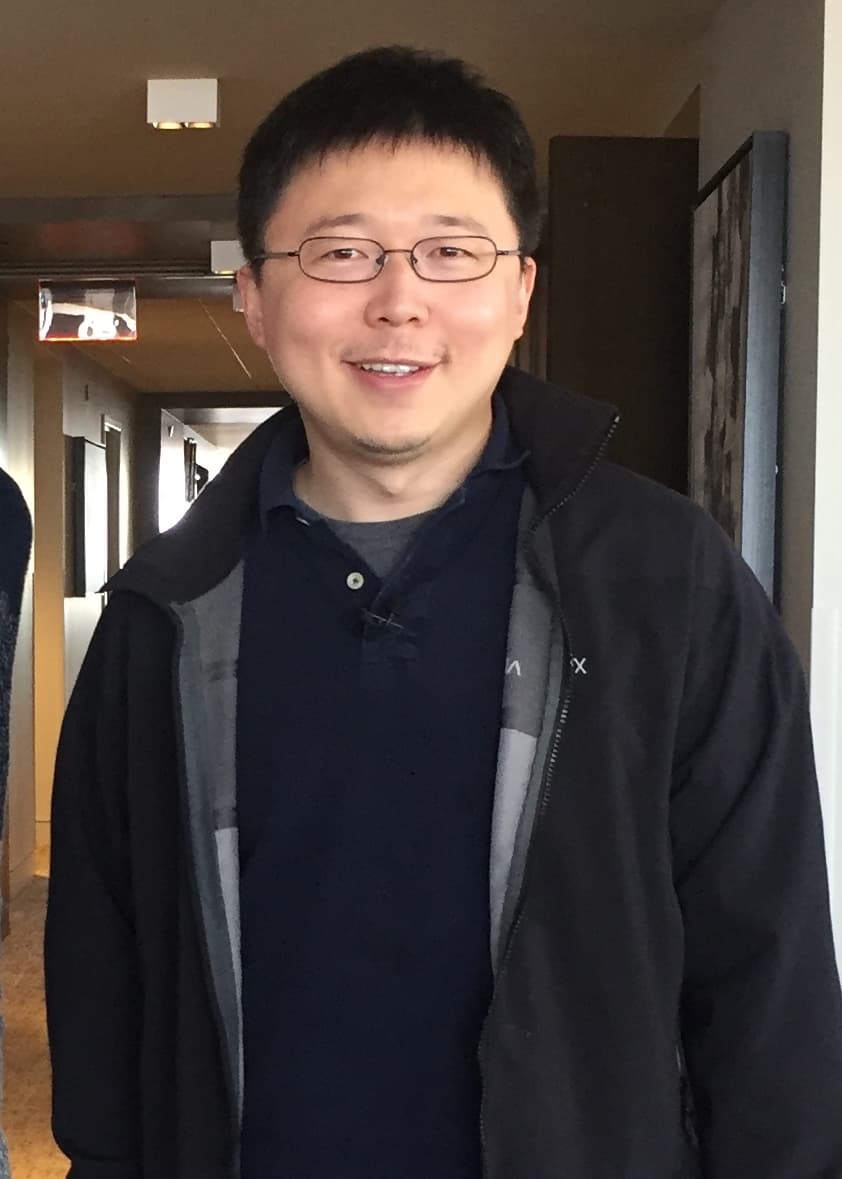
Few scientists can claim to have fundamentally reshaped the trajectory of modern biology before the age of 35. Feng Zhang is one of them. As a core member of the Broad Institute of MIT and Harvard, Zhang was the first researcher to demonstrate that the CRISPR-Cas9 system could be engineered to edit genes in mammalian cells -- a breakthrough that opened the floodgates for a new era of genomic medicine. His work has not only transformed basic research but has also laid the groundwork for therapies targeting genetic diseases, cancers, and infectious pathogens.
From Shijiazhuang to Iowa: An Unlikely Beginning
Feng Zhang was born in 1981 in Shijiazhuang, the capital of Hebei province in northern China. At the age of eleven, he moved with his family to Des Moines, Iowa, where he quickly adapted to American life and developed a deep fascination with biology. In high school, Zhang participated in a gene therapy research program at the Methodist Hospital in Des Moines, working on green fluorescent protein (GFP) and viral vectors. This early exposure to molecular biology ignited a passion that would define his career.
Zhang went on to study chemistry and physics at Harvard University, where he graduated in 2004. He then pursued his PhD at Stanford University under the mentorship of Karl Deisseroth, contributing to the development of optogenetics -- a revolutionary technique that uses light to control neurons. The experience taught Zhang how to engineer biological systems with precision, a skill that would prove invaluable in his later work with CRISPR.
The Race to CRISPR in Mammalian Cells
After completing his PhD, Zhang joined the Broad Institute and MIT as a fellow, quickly establishing his own laboratory. By 2011, he had become aware of the CRISPR-Cas system, a bacterial immune defense mechanism that could be repurposed for genome editing. While Jennifer Doudna and Emmanuelle Charpentier had demonstrated in their landmark June 2012 Science paper that CRISPR-Cas9 could cut DNA in a test tube, the critical next step was proving the system could work inside the complex environment of human and other mammalian cells.
Zhang moved with extraordinary speed and ingenuity. He engineered the Cas9 protein from Streptococcus pyogenes to function efficiently inside eukaryotic cells, optimizing codon usage, adding nuclear localization signals, and designing guide RNAs tailored for mammalian genomes. In January 2013, he published his results in Science, demonstrating successful CRISPR-Cas9 gene editing in both human and mouse cells. The paper appeared simultaneously with a similar publication from George Church's lab at Harvard, but Zhang's work was widely recognized for its comprehensive characterization of the system.
This achievement was not merely incremental -- it was transformative. By showing that CRISPR could be deployed in mammalian cells, Zhang effectively handed the entire biomedical research community a powerful, accessible, and affordable tool for rewriting the code of life.
The Patent Dispute
Zhang's accomplishment quickly became the center of one of the most consequential intellectual property battles in the history of biotechnology. The Broad Institute, on behalf of Zhang, secured key patents covering the use of CRISPR-Cas9 in eukaryotic cells. The University of California, Berkeley, representing Jennifer Doudna, challenged these patents, arguing that their earlier in vitro work made the mammalian application obvious.
The United States Patent Trial and Appeal Board ruled in 2017 that there was no interference between the two sets of claims, effectively allowing the Broad's patents to stand. A subsequent appeal in 2018 upheld this decision. The dispute, while contentious, underscored the enormous commercial value of CRISPR technology and the high stakes involved in its ownership.
Beyond Cas9: Expanding the Toolkit
Zhang has never been content to rest on a single discovery. In the years following his landmark Cas9 paper, he has systematically expanded the CRISPR toolkit, discovering and characterizing new enzymes that address limitations of the original system.
In 2015, his lab identified Cas12a (formerly known as Cpf1), an enzyme that cuts DNA in a different manner than Cas9, producing staggered rather than blunt ends. This property makes Cas12a particularly useful for certain types of gene insertions and modifications. Zhang also discovered Cas13, a CRISPR enzyme that targets RNA rather than DNA, opening up entirely new avenues for gene regulation and diagnostics without permanently altering the genome.
SHERLOCK: CRISPR as a Diagnostic Tool
Building on the Cas13 discovery, Zhang and his collaborators developed SHERLOCK (Specific High-sensitivity Enzymatic Reporter unLOCKing), a diagnostic platform capable of detecting minute quantities of viral or bacterial genetic material. SHERLOCK leverages the collateral cleavage activity of Cas13 -- when Cas13 finds its target RNA sequence, it begins indiscriminately cutting nearby RNA molecules, amplifying a detectable signal.
The technology proved its value during the COVID-19 pandemic, when Zhang's team rapidly developed a SHERLOCK-based test for SARS-CoV-2 that could deliver results in under an hour without requiring expensive laboratory equipment. This work demonstrated that CRISPR's impact extends far beyond gene editing into the realm of rapid, point-of-care diagnostics.
Editas Medicine and Commercial Translation
In 2013, Zhang co-founded Editas Medicine, one of the first companies dedicated to developing CRISPR-based therapies. The company has pursued treatments for genetic eye diseases, blood disorders, and cancers, advancing several candidates into clinical trials. Though Zhang later stepped back from a direct operational role, Editas remains a testament to his vision of translating laboratory discoveries into treatments that reach patients.
Recognition and the McGovern Institute
Zhang holds joint appointments at the Broad Institute and MIT's McGovern Institute for Brain Research, where he continues to explore the intersection of genome engineering and neuroscience. His contributions have earned him numerous awards, including the Canada Gairdner International Award, the Lemelson-MIT Prize, the Tang Prize in Biopharmaceutical Science, and the Harvey Prize. He was elected to the National Academy of Sciences and the National Academy of Inventors while still in his thirties.
Recent Developments (2025–2026)
Zhang's prolific output shows no signs of slowing. In 2025, he received the National Medal of Technology and Innovation alongside Jennifer Doudna, and in January 2026, he was inducted into the National Inventors Hall of Fame.
His lab at the Broad Institute engineered immune-evasive CRISPR enzymes — redesigned versions of Cas9 and Cas12 that mask themselves from the immune system. Published in Nature Communications, this work addresses one of the biggest barriers to in vivo gene therapy: the patient's immune response destroying the editing machinery before it can work.
In 2025, Zhang's team also discovered TIGR-Tas, a new family of RNA-guided DNA-targeting systems with potential applications for genome editing, and published research on rejuvenating the aged immune system — expanding his work from gene editing tools into aging biology.
Research Lab & Companies
- Zhang Lab — Broad Institute of MIT and Harvard, McGovern Institute
- Editas Medicine (EDIT) — Co-founder (CRISPR therapeutics)
- Arbor Biotechnologies — Co-founder (next-gen CRISPR systems)
- Beam Therapeutics (BEAM) — Co-founder (base editing)
- Pairwise Plants — Co-founder (agricultural gene editing)
- Sherlock Biosciences — Co-founder (CRISPR diagnostics)
A Vision for the Future
At the core of Zhang's work is a belief that biology can be engineered to solve pressing human problems. Whether developing new CRISPR enzymes, building diagnostic platforms, or pursuing therapies for devastating genetic diseases, he approaches science with a combination of technical virtuosity and practical ambition. His contributions have already changed the landscape of biomedical research, and the tools he has built will likely shape medicine for decades to come.
For those interested in gene editing, Feng Zhang's career offers a powerful lesson: the most consequential breakthroughs often emerge not from a single moment of discovery, but from the relentless engineering required to make a discovery useful.


