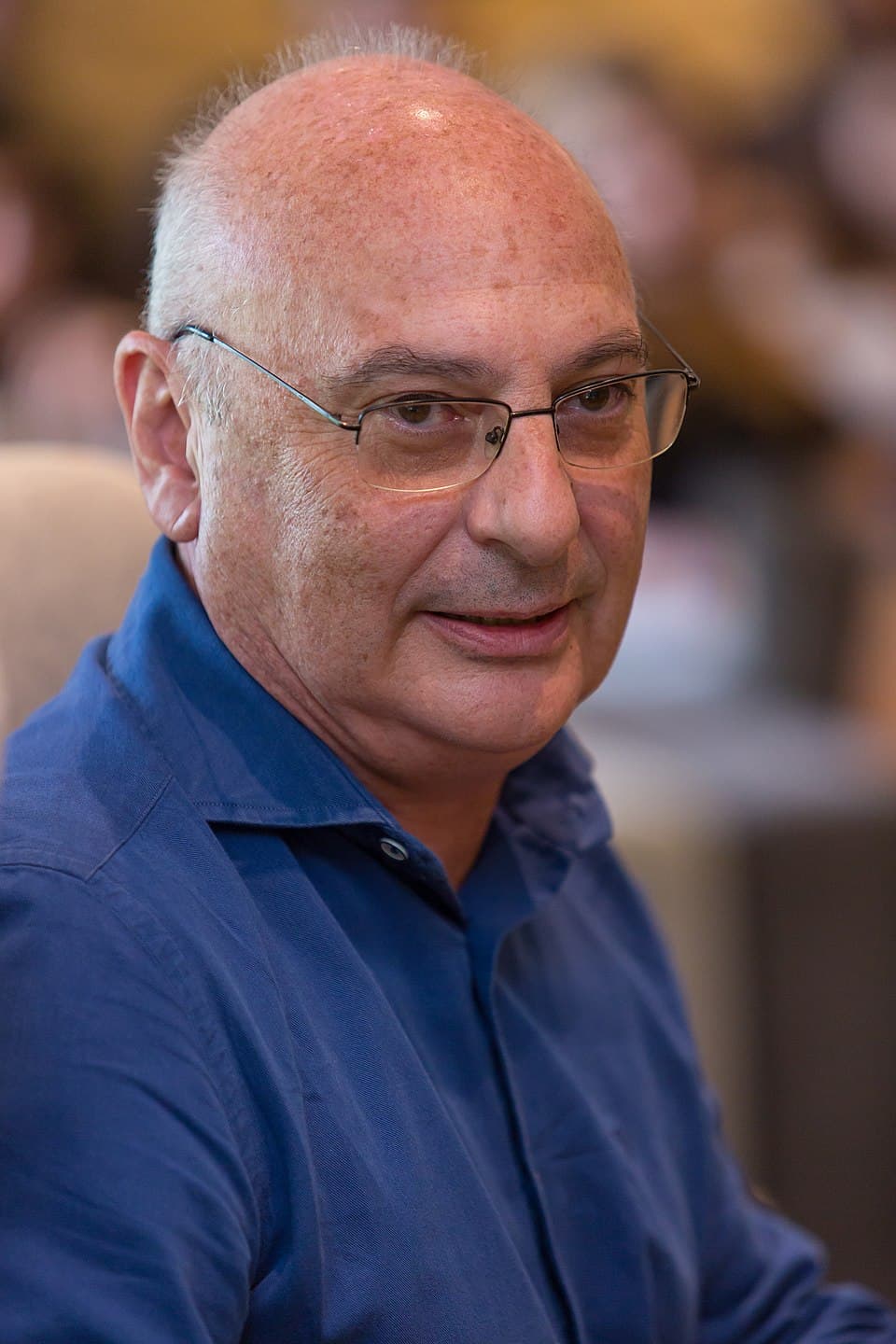
When the Royal Swedish Academy of Sciences announced the 2020 Nobel Prize in Chemistry, Emmanuelle Charpentier became one half of the first all-female team to share the award in a scientific discipline. The honor recognized her foundational work in deciphering how bacteria defend themselves against viruses -- and in transforming that understanding into CRISPR-Cas9, the most powerful gene editing tool the world has ever known. Charpentier's path to Stockholm was anything but conventional, spanning five countries, multiple institutions, and years of painstaking microbiological research that most of the world ignored until it changed everything.
A French Scientist with a Global Career
Emmanuelle Charpentier was born in 1968 in Juvisy-sur-Orge, a commune south of Paris. Growing up near the Institut Pasteur, she was drawn to science from an early age, inspired by the legacy of Louis Pasteur and Marie Curie. She studied biochemistry, microbiology, and genetics at the Pierre and Marie Curie University (now Sorbonne University) in Paris, earning her PhD in 1995 for work on antibiotic resistance mechanisms in the bacterium Listeria monocytogenes.
What followed was an extraordinary odyssey through the world's research institutions. Charpentier held positions in the United States (Rockefeller University, New York University, St. Jude Children's Research Hospital), then returned to Europe to work in Vienna, then Umea in Sweden, then Hannover and Braunschweig in Germany. Each move brought new collaborations, new techniques, and a deepening expertise in the molecular biology of pathogenic bacteria. Colleagues later noted that her willingness to uproot herself repeatedly reflected an uncommon dedication to following the science wherever it led.
The tracrRNA Discovery
Charpentier's Nobel Prize-winning work began with an observation about Streptococcus pyogenes, the bacterium responsible for strep throat and flesh-eating disease. Scientists already knew that bacteria carried mysterious repetitive DNA sequences called CRISPRs (Clustered Regularly Interspaced Short Palindromic Repeats) and that these sequences appeared to function as an immune memory system against viral invaders. But the molecular details of how the system actually worked remained murky.
In 2011, while working at the Laboratory for Molecular Infection Medicine Sweden (MIMS) at Umea University, Charpentier and her team made a critical discovery. They identified a previously unknown small RNA molecule, which they named trans-activating crRNA, or tracrRNA. This molecule was essential for processing the CRISPR array into functional guide RNAs that could direct the Cas9 protein to its viral target. Without tracrRNA, the entire CRISPR defense system fell apart.
The discovery of tracrRNA was the missing piece that made the CRISPR-Cas9 mechanism intelligible. It revealed a surprisingly elegant two-RNA system: the tracrRNA and the crRNA (CRISPR RNA) worked together to guide Cas9 to the correct spot on an invading virus's DNA and trigger its destruction.
The Collaboration with Doudna
At a microbiology conference in Puerto Rico in 2011, Charpentier met Jennifer Doudna, a structural biologist at the University of California, Berkeley, who had deep expertise in RNA biology. The two scientists recognized that their complementary skills could crack the CRISPR-Cas9 system wide open.
Their collaboration moved quickly. Charpentier's group provided the biological insights into the bacterial system, while Doudna's team contributed expertise in RNA structure and biochemistry. Together, along with key contributors including Martin Jinek, they reconstituted the CRISPR-Cas9 system in a test tube and demonstrated that it could be programmed to cut any DNA sequence by simply changing the guide RNA.
Their landmark paper, published in Science in June 2012, showed that the tracrRNA and crRNA could be fused into a single guide RNA, dramatically simplifying the system. This was the paper that electrified the scientific world. It transformed CRISPR from an obscure curiosity of bacterial biology into a programmable molecular scalpel.
The Nobel Prize
On October 7, 2020, Charpentier and Doudna were awarded the Nobel Prize in Chemistry "for the development of a method for genome editing." The award was notable not only for its scientific significance but also as a historic moment for women in science. Charpentier and Doudna were the first two women to share a Nobel Prize in the sciences without a male co-laureate.
In her Nobel lecture, Charpentier emphasized the importance of curiosity-driven research. Her work had not begun with any intention of developing a gene editing tool. She had simply wanted to understand how bacteria fight off viruses. The practical applications emerged from that fundamental understanding -- a pattern that repeats throughout the history of science.
CRISPR Therapeutics: From Bench to Bedside
Charpentier has also demonstrated a keen sense for translating science into medicine. In 2013, she co-founded CRISPR Therapeutics, a biotechnology company headquartered in Zug, Switzerland, and Cambridge, Massachusetts. The company became the first to bring a CRISPR-based therapy through regulatory approval when Casgevy (exagamglogene autotemcel) was authorized in 2023 for the treatment of sickle cell disease and transfusion-dependent beta-thalassemia.
Casgevy works by editing a patient's own blood stem cells to reactivate fetal hemoglobin production, compensating for the defective adult hemoglobin that causes these devastating blood disorders. The approval represented a watershed moment for the entire field of gene editing, and Charpentier's company was at the forefront.
The Max Planck Institute and Continuing Research
Since 2015, Charpentier has served as a director at the Max Planck Unit for the Science of Pathogens in Berlin, an institute created specifically for her. There, she continues to investigate the molecular mechanisms of bacterial infection and the biology of CRISPR systems. Her research extends beyond Cas9 to explore the diversity of CRISPR systems found across the microbial world, searching for new enzymes and mechanisms that may prove useful for future biotechnological applications.
Women in Science
Charpentier has spoken thoughtfully about the challenges women face in science, noting that systemic barriers -- from funding disparities to cultural biases -- continue to limit the participation and advancement of women in research. She has advocated for institutional changes that support work-life balance and create pathways for women to reach leadership positions in science.
At the same time, she has resisted being defined primarily by her gender, insisting that her work should be judged on its merits. "I wish that this will provide a positive message specifically for young girls who would like to follow the path of science," she said upon receiving the Nobel Prize, "and to show them that women in science can also have an impact."
Recent Developments (2025–2026)
Charpentier continues to lead the Max Planck Unit for the Science of Pathogens (MPUSP) in Berlin, which she founded in 2018. Her research at MPUSP focuses on regulatory mechanisms underlying infection and immunity in bacterial pathogens, particularly Streptococcus pyogenes. In March 2026, the PTAB upheld the Broad Institute's priority in the ongoing CRISPR patent case, a decision that affects the patent landscape Charpentier helped establish with her foundational 2012 work.
CRISPR Therapeutics, the company she co-founded, saw Casgevy patient initiation increase nearly 3x in 2025 relative to 2024, with 64 patients receiving treatment. The company expects to initiate a clinical trial for CTX460 (cardiovascular) in mid-2026.
Research Lab & Companies
- Max Planck Unit for the Science of Pathogens — Founding Director, Berlin
- CRISPR Therapeutics (CRSP) — Co-founder (Casgevy, FDA-approved CRISPR therapy)
- ERS Genomics — Co-founder (CRISPR licensing)
- Nobel Prize in Chemistry 2020 — shared with Jennifer Doudna
A Legacy of Curiosity
Emmanuelle Charpentier's career is a testament to the power of following fundamental questions without knowing where they will lead. Her discovery of tracrRNA and her collaboration with Jennifer Doudna gave the world one of the most transformative technologies of the twenty-first century. From a small bacterial immune system to a Nobel Prize and the first approved CRISPR therapy, her journey illustrates that the most profound advances in medicine often begin with a simple question about how nature works.