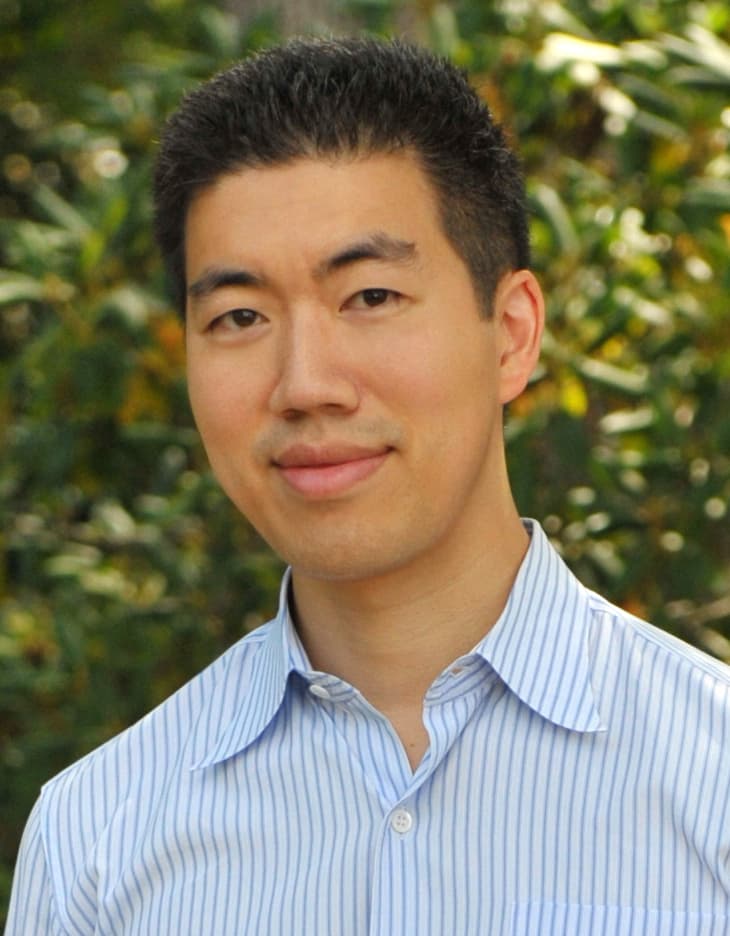
When CRISPR-Cas9 burst onto the scene, it gave scientists an unprecedented ability to cut DNA at specific locations. But cutting DNA is a blunt instrument. It creates double-strand breaks that the cell must repair, often introducing errors in the process. David Liu, a chemist at Harvard University and the Broad Institute of MIT and Harvard, looked at this limitation and asked a deceptively simple question: what if we could edit DNA without cutting it?
The answer to that question led to two of the most important advances in genome editing since CRISPR itself: base editing and prime editing. Together, these technologies have expanded the toolkit of genetic medicine and spawned companies now developing therapies for diseases that traditional CRISPR cannot easily address.
From Chemistry to Biology
David R. Liu was born in 1973 in Riverside, California. He showed extraordinary academic talent early, graduating from Harvard College summa cum laude in 1994 with a degree in chemistry. He earned his PhD in organic chemistry from UC Berkeley in 1999 under the mentorship of Peter Schultz, where he worked on expanding the genetic code.
Liu joined the Harvard faculty at the age of 25, making him one of the youngest professors in the university's history. His early research focused on directed evolution of molecules and chemical biology. It was this background in chemistry, rather than molecular biology, that gave Liu a distinctive perspective on genome editing. Where biologists saw CRISPR as a cutting tool, Liu saw an opportunity for chemical transformation.
The Invention of Base Editing (2016)
In 2016, Liu and his postdoctoral researcher Alexis Komor published a landmark paper in Nature describing the first base editor. The concept was ingenious: take a catalytically impaired Cas9 protein that can find a specific DNA sequence but cannot cut both strands, and fuse it to a deaminase enzyme that can chemically convert one DNA base into another.
The first base editor, called BE3, could convert cytosine (C) to thymine (T) at a targeted location. This single-letter change, performed without breaking the DNA double helix, addressed approximately 14% of all known pathogenic point mutations in humans.
A year later, Liu's lab developed adenine base editors (ABEs) that convert adenine (A) to guanine (G). Together, cytosine and adenine base editors can correct the four most common types of point mutations (C to T, T to C, A to G, and G to A), covering roughly 60% of all disease-causing point mutations.
The advantages over traditional CRISPR-Cas9 were significant:
- No double-strand breaks: Base editing avoids the unpredictable insertion and deletion mutations (indels) that result from DNA repair after Cas9 cutting.
- Reduced off-target damage: Without double-strand breaks, the risk of large chromosomal rearrangements and translocations is dramatically lower.
- Higher precision for point mutations: For diseases caused by a single-letter change in DNA, base editing provides a cleaner correction than cut-and-repair approaches.
The Invention of Prime Editing (2019)
Base editing was transformative, but it was limited to four specific types of base-to-base conversions. Many genetic diseases involve other types of mutations, including insertions, deletions, and all 12 possible point mutations. Liu wanted something more versatile.
In October 2019, Liu and his graduate student Andrew Anzalone published another breakthrough paper in Nature describing prime editing. If base editing was a pencil erasing and rewriting a single letter, prime editing was a word processor capable of search-and-replace operations on the genome.
Prime editors consist of three components: a modified Cas9 that nicks only one strand of DNA (rather than cutting both), a reverse transcriptase enzyme fused to the Cas9, and a prime editing guide RNA (pegRNA) that both directs the editor to the target site and contains a template for the desired edit.
The mechanism works like this:
- The Cas9 nickase cuts one strand of DNA at the target site.
- The pegRNA hybridizes with the exposed strand.
- The reverse transcriptase uses the RNA template to write new DNA, incorporating the desired edit.
- The cell's natural DNA repair machinery integrates the new sequence.
Prime editing can make all 12 types of point mutations, as well as small insertions (up to tens of base pairs) and small deletions, all without double-strand breaks and without requiring a separate DNA donor template. Liu described it as a technology that could, in principle, correct up to 89% of known pathogenic human genetic variants.
From Lab to Company
Liu's inventions quickly attracted commercial interest. He co-founded two major companies to translate these technologies into medicines:
Beam Therapeutics, founded in 2017, is developing base editing therapies. The company's lead program targets sickle cell disease using a base editor to reactivate fetal hemoglobin, similar in concept to Casgevy but using a fundamentally different editing mechanism. Beam is also pursuing programs in oncology, liver diseases, and immunology. The company went public in 2020 and has built a substantial clinical pipeline.
Prime Medicine, founded in 2019, is commercializing prime editing. The company is developing therapies for chronic granulomatous disease, alpha-1 antitrypsin deficiency, and other genetic conditions where the versatility of prime editing offers advantages over base editing or traditional CRISPR. Prime Medicine went public in 2022.
Liu also maintains his academic lab, which continues to push the boundaries of what gene editing can accomplish. His group has developed more advanced versions of both base editors and prime editors, improving their efficiency, precision, and delivery.
How His Work Differs from Traditional CRISPR
To understand Liu's contribution, it helps to think of gene editing technologies as a spectrum of precision:
| Technology | Mechanism | Best For |
|---|---|---|
| CRISPR-Cas9 | Double-strand cut | Gene knockouts, large insertions |
| Base Editing | Chemical conversion | Single-letter corrections (C-T, A-G) |
| Prime Editing | Search-and-replace | Any small mutation, insertions, deletions |
Traditional CRISPR-Cas9, as developed by Jennifer Doudna and Emmanuelle Charpentier, remains the best tool for certain applications, particularly when the goal is to disrupt a gene entirely. But for the precise correction of disease-causing mutations, base editing and prime editing offer superior control and safety profiles.
Liu has been careful to position these technologies as complementary rather than competitive. In his view, the field needs all of these tools, and the right choice depends on the specific mutation and therapeutic context.
Recognition and Awards
Liu's contributions have earned him numerous accolades. He has been named to the National Academy of Sciences, the National Academy of Medicine, and the American Academy of Arts and Sciences. He has received the Breakthrough Prize in Life Sciences, the NAS Award in Chemical Sciences, and the Solvay Prize.
He was named one of Time magazine's 100 Most Influential People and has been consistently listed among the world's most cited researchers. His h-index and publication record place him among the most impactful scientists of his generation.
Recent Developments (2025–2026)
Liu's work reached new milestones in 2025–2026. He was awarded the 2025 Breakthrough Prize in Life Sciences — one of the most prestigious awards in science — for developing base editing and prime editing. He was also named to the TIME100 Health list in 2025 and received the 2026 ACS Award for Creative Invention.
Clinically, at least 23 clinical trials are now using base editing or prime editing to treat diseases including leukemias, hypercholesterolemia, sickle cell disease, and beta-thalassemia. In a landmark case, baby KJ Muldoon became the first person treated with a customized gene editing therapy based on Liu's technology in May 2025. Actress Alyssa Tapley became the first person to undergo cancer treatment using base editing at Great Ormond Street Hospital.
His lab also developed prime editing treatments to repair five different genetic mutations causing alternating hemiplegia of childhood (AHC) — the first time prime editing has been used to address a neurological disease in animals.
Research Lab & Companies
- Liu Lab — Broad Institute, Harvard University (Merkin Institute director)
- Beam Therapeutics (BEAM) — Co-founder (base editing therapeutics)
- Prime Medicine (PRME) — Co-founder (prime editing therapeutics)
- Chroma Medicine — Co-founder (epigenome editing)
- Exo Therapeutics — Co-founder
- HHMI Investigator — Howard Hughes Medical Institute
The Future Vision
Liu envisions a future where gene editing therapies are available for the thousands of genetic diseases that currently have no treatment. His lab continues to work on improving editing efficiency in hard-to-reach tissues, developing smaller editors that are easier to deliver via viral vectors, and creating new classes of editors that can make even larger genomic changes.
One particularly exciting direction is the development of epigenetic editors that can turn genes on or off without changing the underlying DNA sequence. This approach could be reversible, adding another layer of safety for therapeutic applications.
Liu's career illustrates a profound truth about scientific progress: sometimes the most important advances come not from inventing entirely new tools but from refining existing ones with creativity and rigor. By applying chemical thinking to biological problems, David Liu has given the world editing technologies that are more precise, more versatile, and ultimately more useful for treating human disease.
The code of life is being rewritten, and Liu is holding the pen.


